How to Prep Your Pool Before a Hurricane in Florida
Do not drain the pool. That single mistake causes more storm damage on the Space Coast than the wind does — here is the full before, during and after checklist.
Hurricane pool prep comes down to five things: leave the water in, shut down and protect the equipment, clear the deck, over-chlorinate, and stay out of the water until the power and the chemistry are back. Hurricane season runs June 1 through November 30, and a pool in Satellite Beach will see tropical rain bands several times in a normal year. The pool itself is the most storm-resistant thing in your yard — the equipment pad is what needs protecting.
Should you drain your pool before a hurricane?
No. Draining a pool before a storm is the single most damaging thing a Florida owner can do. Brevard County has a high water table, and an empty or low shell can float, crack or shift when groundwater rises during heavy rain — a repair that dwarfs any storm cleanup.
Lower the water level only if you must, and only by about a foot below the skimmer to absorb rainfall. The weight of a full pool is what holds the shell in place.
What should you do 48 hours before landfall?
- 01Balance the water and shock the pool so chlorine is at the high end when the power goes out.
- 02Run the filter for a full cycle and clean it, so the system starts the storm clean.
- 03Add extra chlorine and algaecide the day before, since the pump will not be circulating afterward.
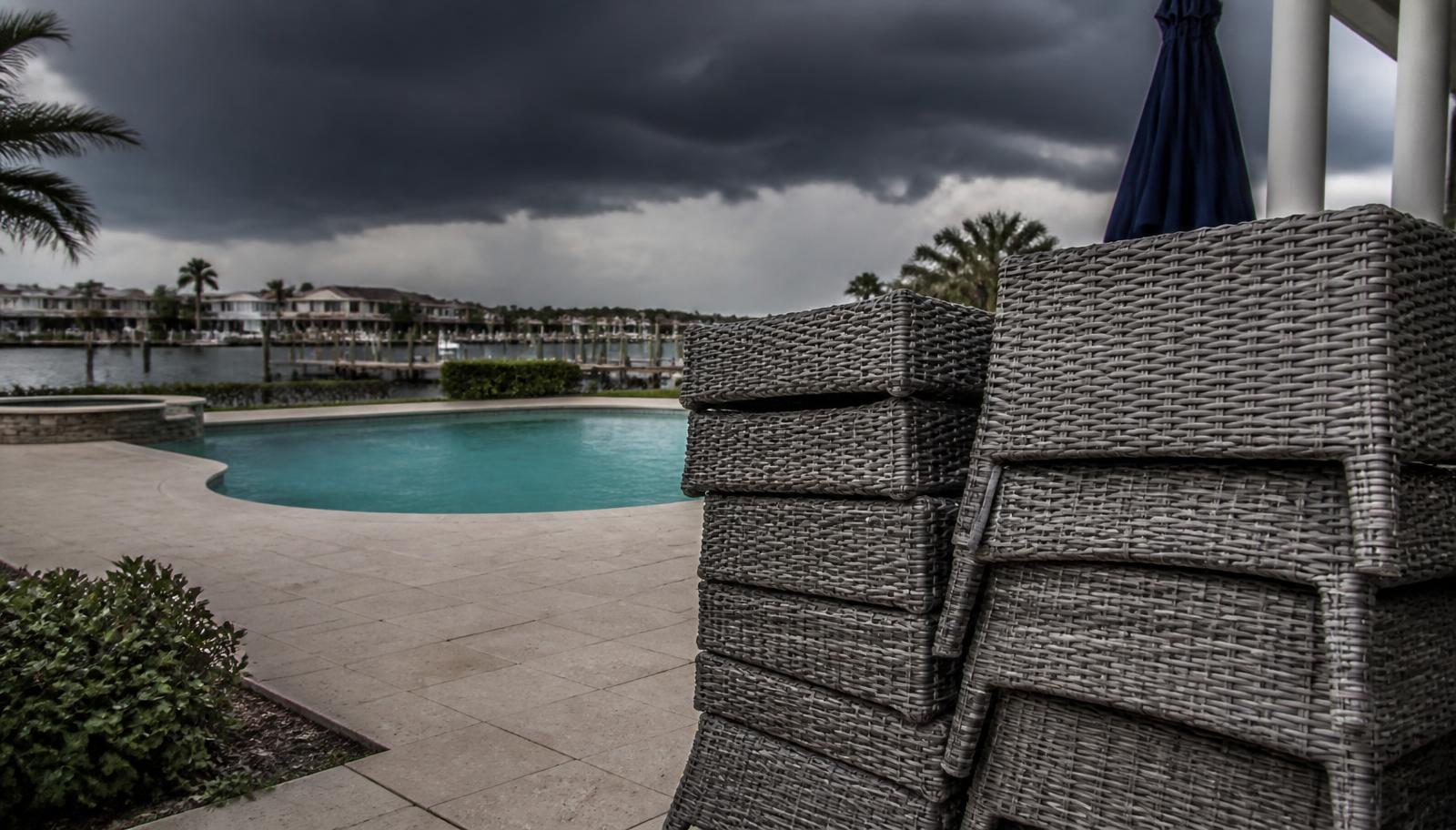
- 04Remove and store all loose deck items — chairs, umbrellas, toys, solar covers, cleaning poles, robotic cleaners.
- 05Trim palm fronds and loose branches overhanging the pool.
- 06Photograph the pool, deck and equipment pad for insurance.
How do you protect pool equipment in a storm?
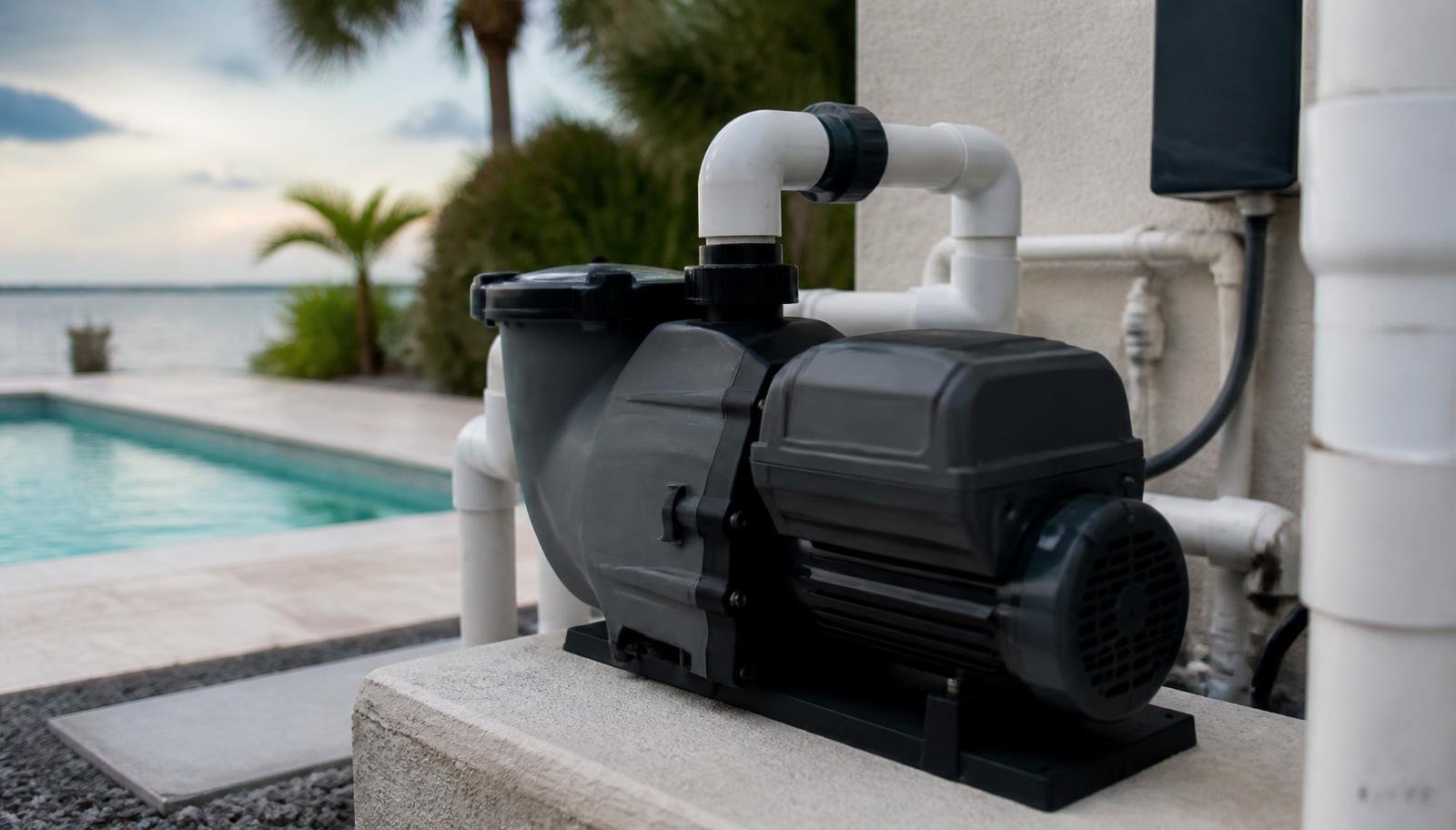
Power surges and floodwater kill more pool equipment on the Space Coast than flying debris. Turn the pump off at the breaker before the storm arrives, not just at the timer, and leave it off until the water recedes and utility power is stable.
- Shut off power at the breaker to the pump, salt chlorine generator and lighting
- Wrap the pump motor and control panel in heavy plastic and secure it, leaving drainage at the bottom
- Disconnect and store portable equipment such as robotic cleaners and booster-driven vacuums
- Never bury or submerge equipment in an attempt to shelter it
- Leave valves in their normal running positions so the system is ready to restart
The pool survives the hurricane. The pump, the panel and the salt cell are what you are actually protecting.
What about the pool cover?
Leave a solid safety cover on if it is anchored, and take a solar blanket off. A floating cover becomes a sail, and it traps debris that then scours the plaster. Automatic cover tracks should be closed and the motor powered down at the breaker.
What to do after the storm passes
- 01Wait for utility power to be restored and stable before switching the breaker back on.
- 02Inspect the equipment pad for standing water, and never energize a motor that was submerged — it needs to be checked first.
- 03Skim heavy debris out by hand before running the pump, so the impeller does not swallow twigs and fronds.
- 04Empty the skimmer and pump baskets, then check filter pressure.
- 05Run the pump continuously for 24 to 48 hours once it is safe, then test and rebalance.
| Storm issue | What it does to the pool | Fix |
|---|---|---|
| Heavy rain dilution | Drops chlorine, stabilizer and alkalinity | Test and rebalance after 24 hours of filtration |
| Debris load | Clogs baskets and stains plaster | Hand-skim first, then vacuum |
| Days without power | Stagnant water, algae bloom starts | Shock and brush, or book green pool recovery |
| Submerged motor | Failed bearings and windings | Do not energize; have it inspected |
| Runoff and yard debris | Phosphates and organics feed algae | Filter clean and full chemistry reset |
How long until the pool is swimmable again?
Usually two to five days after power returns, depending on how long circulation was down and how much debris landed in the water. A pool that sat stagnant for a week in September heat often turns, and that is a green pool recovery job rather than a weekend of shock. If the water has gone from clear to milky rather than green, the causes in cloudy pool water usually apply.
Do you need a service visit after a storm?
Book one if the pump was underwater, if the pool sat without circulation for more than three days, if the water is green or opaque, or if you see new cracks in the deck or coping. Storm restarts are the busiest week of our year, so it is worth getting on the list early — contact us with photos and we will tell you what the pool actually needs. Ongoing weekly pool cleaning customers get storm prep and restart handled as part of the route.
How to Prep Your Pool Before a Hurricane in Florida FAQs
Should I drain my pool before a hurricane?
+
No. A drained pool can pop out of the ground or crack when the water table rises during heavy rain. Lower it about a foot below the skimmer at most.
Should I turn off my pool pump during a hurricane?
+
Yes. Shut the pump off at the breaker before the storm, not just at the timer, and leave it off until utility power is stable and the pad is dry.
Can I swim in my pool after a hurricane?
+
Not until circulation has run for at least 24 hours and testing shows balanced chlorine and pH. Storm runoff carries bacteria and organic debris.
How much chlorine should I add before a storm?
+
Shock the pool the day before landfall so chlorine is at the top of its normal range, since the pump will be off and the rain will dilute the water.