How to Tell If Your Pool Is Leaking (Florida Owner's Guide)
A Space Coast pool can lose water to evaporation, splash-out, or a real leak — and the three look identical from the deck. Here is how to tell them apart before you pay anyone.
Pool leak detection starts with one question: is your pool losing more water than evaporation can explain? In Satellite Beach and the rest of coastal Brevard County, a pool normally loses roughly a quarter inch to a half inch of water a day to evaporation, more on hot, windy afternoons. Anything past that, day after day, is a leak until proven otherwise. The 24-hour bucket test below settles it at home in a single day, and pool leak detection picks up where that test leaves off.
How much water loss is normal on the Space Coast?
A quarter inch to a half inch per day is the normal range for an uncovered residential pool here. Summer heat, steady ocean breeze and low overnight humidity all push evaporation toward the top of that range, while a rainy week in August can hide a leak entirely by refilling what the pool lost. Splash-out from a busy weekend and backwashing a sand or DE filter also read as water loss and have nothing to do with a leak.
| Water loss per day | Most likely cause | What to do |
|---|---|---|
| Up to 1/2 inch | Normal evaporation | Nothing — keep an eye on the trend |
| 1/2 to 1 inch | Evaporation plus splash-out, or a small leak | Run the bucket test |
| 1 to 2 inches | Plumbing, fitting or skimmer leak | Book leak detection |
| More than 2 inches | Main drain, return line or structural leak | Book leak detection now |
| Loss only when the pump runs | Pressure-side plumbing or return line | Book leak detection |
How do you run a bucket test on a pool?
The bucket test compares your pool's water loss to a control sample of the same water in the same weather, which cancels out evaporation. It takes five minutes to set up and 24 hours to read, and it costs nothing.
- 01Fill a 5-gallon bucket with pool water to about three inches from the rim.
- 02Set the bucket on the second step of the pool so it floats at a similar temperature; weight it if needed so it sits stable.
- 03Mark the water level inside the bucket and the pool level outside it, on the bucket wall, with tape.
- 04Leave the pump running on its normal schedule, and keep everyone out of the pool for 24 hours.
- 05Read both marks after 24 hours. Equal drop means evaporation. A larger drop in the pool means a leak.
- 06Repeat with the pump off for a second 24 hours to narrow down where the leak sits.
That second round matters. If the pool loses more with the pump running, suspect the pressure side — return lines and their fittings. If it loses more with the pump off, suspect the suction side, the main drain, or the shell itself. Skip the test if it rains; the results will not mean anything.
Nine signs your pool is actually leaking
- You add water more than once a week outside of a heat wave
- The autofill runs constantly, or your water bill climbs without explanation
- A soggy, spongy or unusually green patch of yard sits near the equipment pad or a buried line
- Cracked, loose or settling deck sections, or coping that has shifted
- Air bubbles coming out of the returns, or the pump losing prime
- Chlorine and stabilizer readings that fall faster than usual because fresh water keeps diluting them
- Persistent algae you cannot hold off, since pool chemical balancing fights a moving target when the pool is constantly refilling
- Standing water or drips at the equipment pad, valves or filter
- The water level stops dropping once it reaches the skimmer mouth or a light niche
That last one is the most useful observation an owner can make. Where the water stops tells you the depth of the leak, and it saves real time during a professional inspection.
Why Florida makes pool leaks worse than they look
Brevard County sits on sandy soil with a high water table, so a leaking pool does not just lose water — it moves soil. Water escaping a buried return line washes sand out from under the deck and the shell, which is how a small plumbing leak becomes settled pavers, a cracked deck, or a shifted skimmer over a season or two.
Salt air adds a second layer. Coastal properties in Satellite Beach, Indialantic and Cocoa Beach corrode equipment pad fittings and fasteners faster than inland homes, and a weeping union at the pad can pass for evaporation for months. Hurricane season, June 1 through November 30, complicates it again: heavy rain masks losses one week and a power outage stops the autofill the next.
The cheapest leak is the one you catch in the same season it starts. Everything after that is deck work.
How does professional pool leak detection work?
A professional leak inspection isolates the plumbing from the shell and tests each one separately rather than guessing. The goal is a specific location and a specific repair, not a general finding that the pool leaks somewhere.
- Pressure testing each line — suction, return and main drain — to prove which one loses pressure
- Dye testing at the skimmer throat, light niche, return fittings, main drain and any visible crack, with the pump off so dye moves toward the leak
- Listening equipment to locate an underground line leak without digging up the whole run
- Dye and visual inspection of the shell, tile line and bond beam
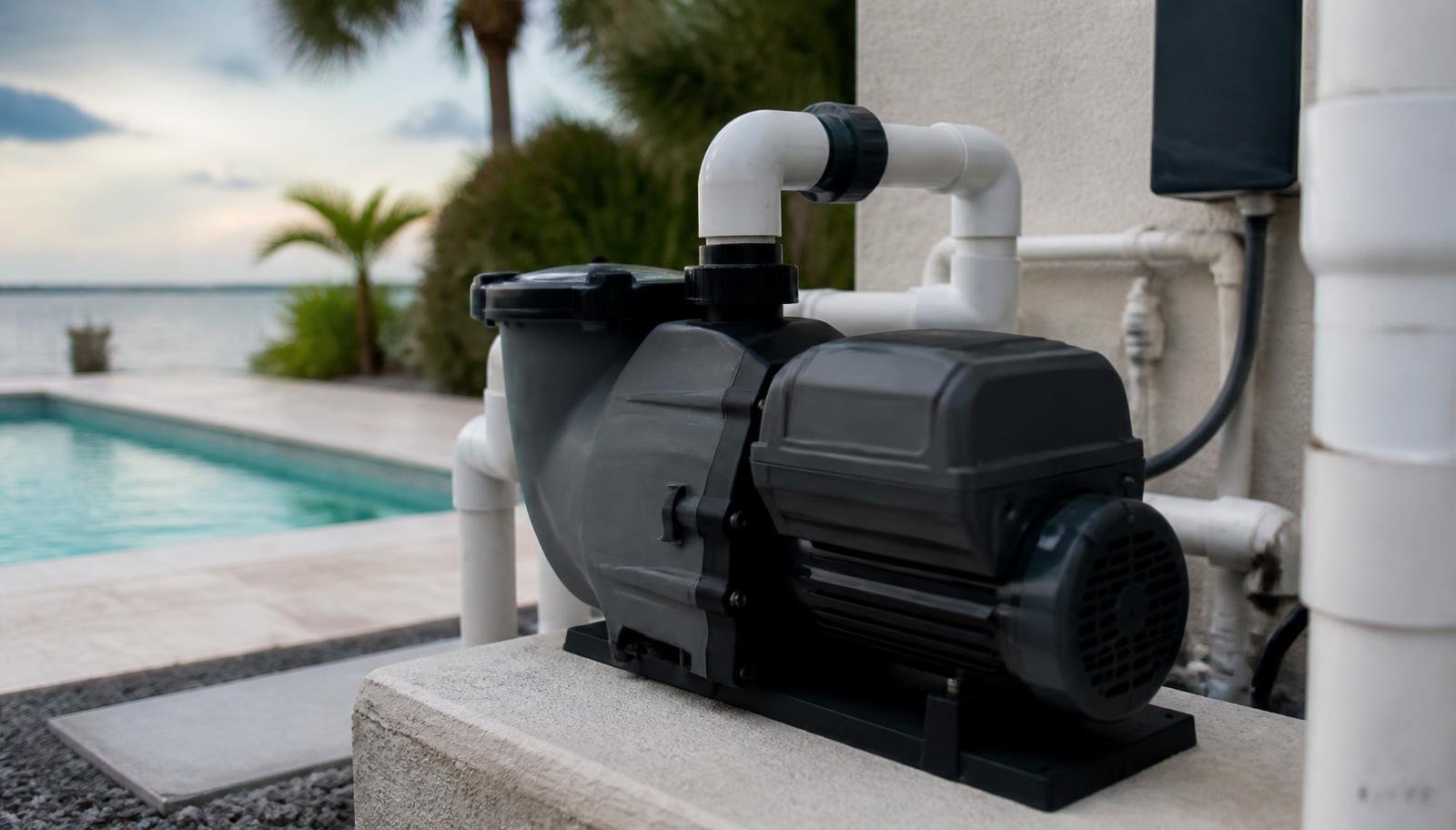
- A full check of the equipment pad, where a surprising share of 'pool leaks' actually live
Cost varies with how much has to be isolated and whether the leak is under the deck, so it is worth asking what the inspection covers before booking. We give a straight answer on scope and next steps when you contact us with what your bucket test showed.
Can you fix a pool leak yourself?
Some of them, yes. A worn skimmer gasket, a loose return fitting, a cracked pump lid o-ring or a torn light-niche seal are within reach of a handy owner with pool putty or a replacement part. Anything buried, structural, or behind the tile is not — the digging and the repair both need the leak located first, or you end up replacing deck for nothing.
One rule holds regardless: never let a leaking pool drain below the skimmer for long. A pump running dry can be destroyed in minutes, and that turns a plumbing repair into pool pump and motor repair on top of it. Shut the pump off and keep the water above the skimmer mouth until the leak is found.
How long can you wait before fixing a leak?
Not long, and the reason is mostly chemistry and soil rather than the water itself. Constant refilling dilutes stabilizer and drags chlorine down with it, which is a straight path to the kind of bloom described in why pools turn green in Brevard County. Meanwhile the escaping water keeps carrying sand away from wherever it exits.
| If you wait | What tends to happen |
|---|---|
| A few days | Higher water use, unstable chlorine |
| A few weeks | Chemistry keeps drifting, algae gets a foothold |
| A few months | Soil washout starts, deck or coping begins to move |
| A full season | Structural repair joins the plumbing repair |
Preventing the next leak
Most leaks announce themselves before they matter, and weekly eyes on the equipment pad catch nearly all of them. Watch filter pressure, look for drips at unions and valves, and keep a simple log of how often the autofill runs. Owners on our weekly pool cleaning route get that check every visit, and short-term rental owners get it before guests arrive rather than after a complaint.
If you are buying a home on the Space Coast, put the pool in front of someone qualified before closing — a general home inspection excludes pool plumbing and shell condition, so a pool inspection is the only place a leak shows up before it becomes yours.
How to Tell If Your Pool Is Leaking (Florida Owner's Guide) FAQs
How much water loss is normal for a pool in Florida?
+
About a quarter inch to a half inch per day from evaporation on an uncovered pool. Consistent loss above a half inch a day, when it has not rained and no one has been swimming, points to a leak.
How do I know if my pool is leaking or just evaporating?
+
Run a 24-hour bucket test. Float a bucket of pool water on the steps, mark the level inside and outside, and compare after a day. If the pool drops more than the bucket, you have a leak.
Can a pool leak fix itself?
+
No. Leak sealer products can temporarily slow a very small leak, but the underlying crack, fitting or line does not repair itself and the loss returns, usually larger.
Where do pool leaks happen most often?
+
The skimmer throat, return and suction line fittings, the light niche conduit, and the equipment pad are the most common spots. Shell cracks are less common but more expensive to address.