7 Signs Your Pool Pump Is About to Fail
Pumps rarely die without warning. Screeching bearings, a loss of prime and a breaker that trips in the afternoon heat are all the same conversation.
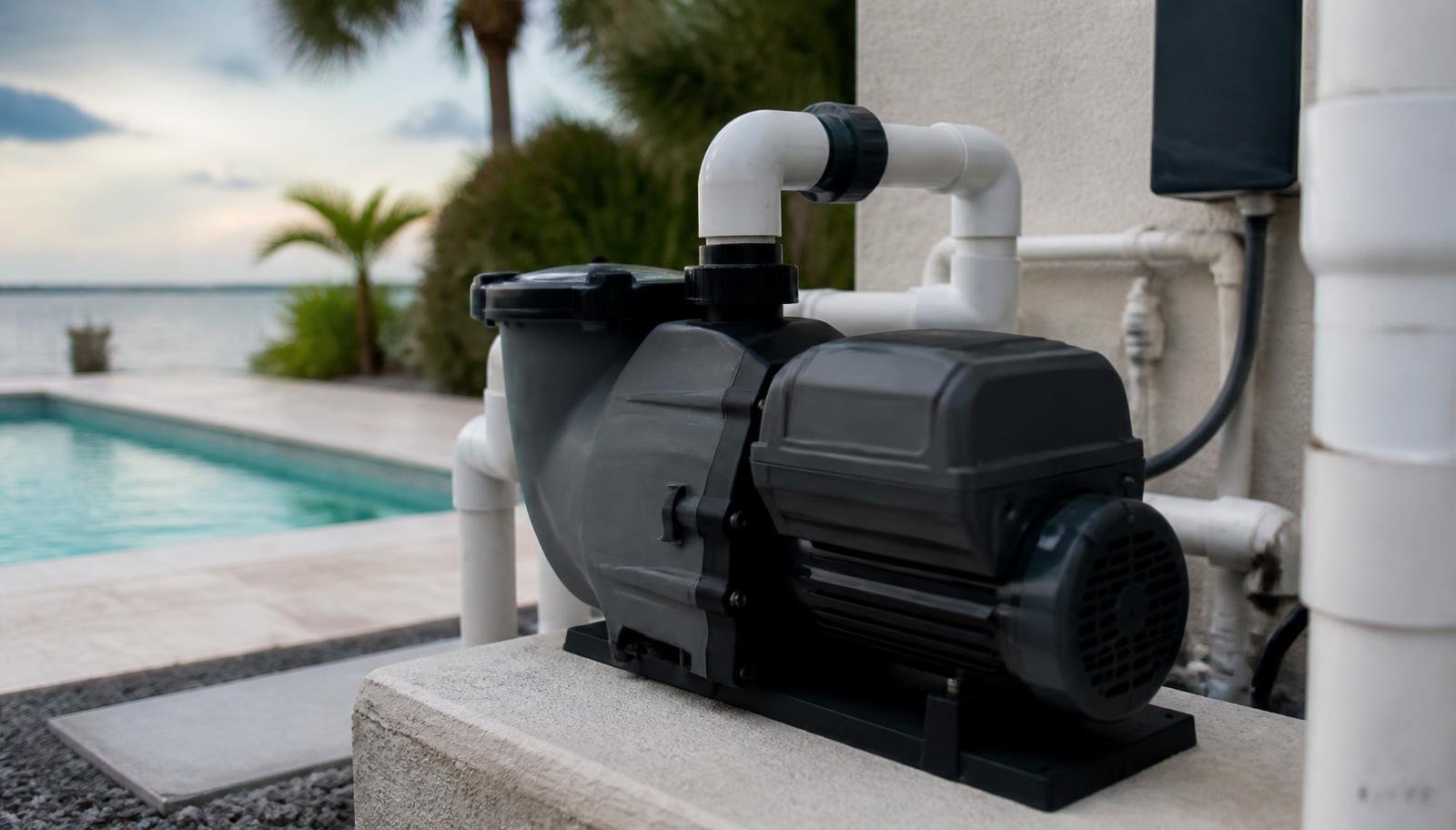
Pool pump repair is almost always cheaper when it starts with a noise rather than a dead motor. On the coast, salt air and year-round run hours age a pump faster than in most of the country, so a Satellite Beach pump lives a harder life than the same unit inland. These are the seven signs worth acting on, and what each usually turns out to be.
1. A screeching or grinding motor
A high-pitched screech is worn bearings, and it is the most reliable early warning a pump gives. Bearings can often be replaced if the motor is caught before the noise turns into a grind, which usually means the shaft has already damaged the housing.
2. The pump loses prime
A pump that will not hold water in its basket is pulling air on the suction side. The usual culprits are a dried-out pump lid o-ring, a cracked lid, a loose union, or a low water level in the pool — and if the water level keeps dropping on its own, that is a leak detection question.
3. Air bubbles at the returns
Bubbles coming out of the return jets mean air is entering before the pump. Same family of causes as lost prime, and the same risk: a pump running with air in it runs dry in patches and cooks its seal.
4. The motor is too hot to touch or shuts off mid-cycle
Motors here run hot in the afternoon sun, but a motor that thermally shuts down and restarts is either starved of airflow, overloaded by a clogged impeller, or failing internally. Clear the vents and baskets first, then have it checked.
5. It trips the breaker
Repeated breaker trips are an electrical fault, not an inconvenience. Salt air corrodes conduit fittings and terminations on coastal equipment pads, and a motor drawing more current than it should is a fire and shock risk. Stop running it until it is inspected.
6. Weak flow with a clean filter
If the returns are lazy and the filter is genuinely clean, the pump is not moving what it used to. A worn impeller, a clogged impeller, a failing seal, or a partially blocked suction line all read the same way at the surface.
7. Water under the motor
A steady drip between the pump housing and the motor is a failed mechanical seal. Water tracking into the motor is what turns a modest repair into a replacement, so this one has a short clock on it.
| Symptom | Most likely cause | Repair or replace |
|---|---|---|
| Screeching | Worn bearings | Repair if caught early |
| Loses prime | Air leak, lid o-ring, low water | Repair |
| Bubbles at returns | Suction-side air leak | Repair |
| Overheating | Airflow, clog, or failing motor | Depends on findings |
| Breaker trips | Electrical fault or shorted motor | Often replace |
| Water under motor | Failed shaft seal | Repair now, replace if water reached the motor |
A pump that is telling you something in June is a repair. The same pump in August is a replacement.
How long should a pool pump last on the coast?
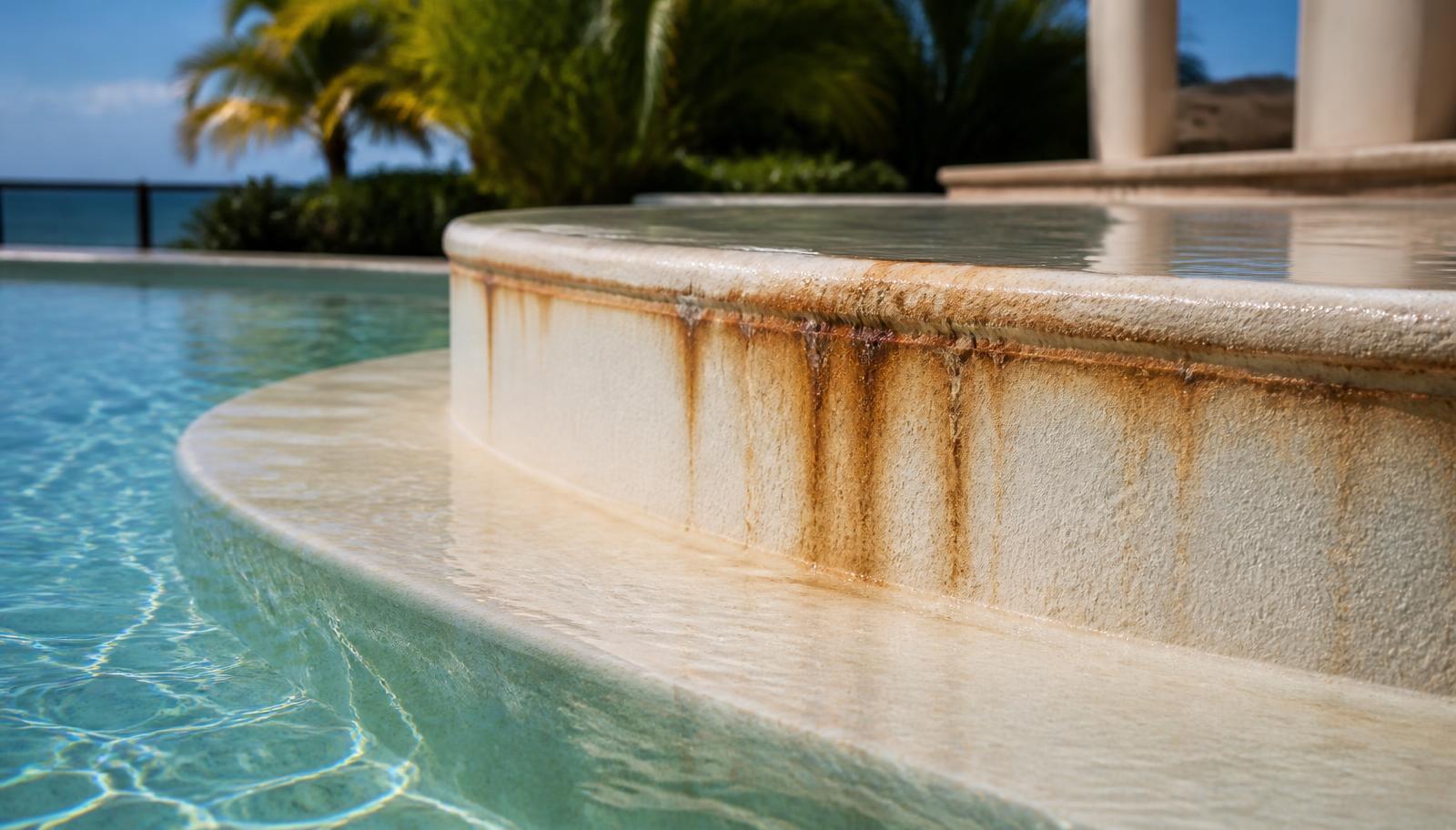
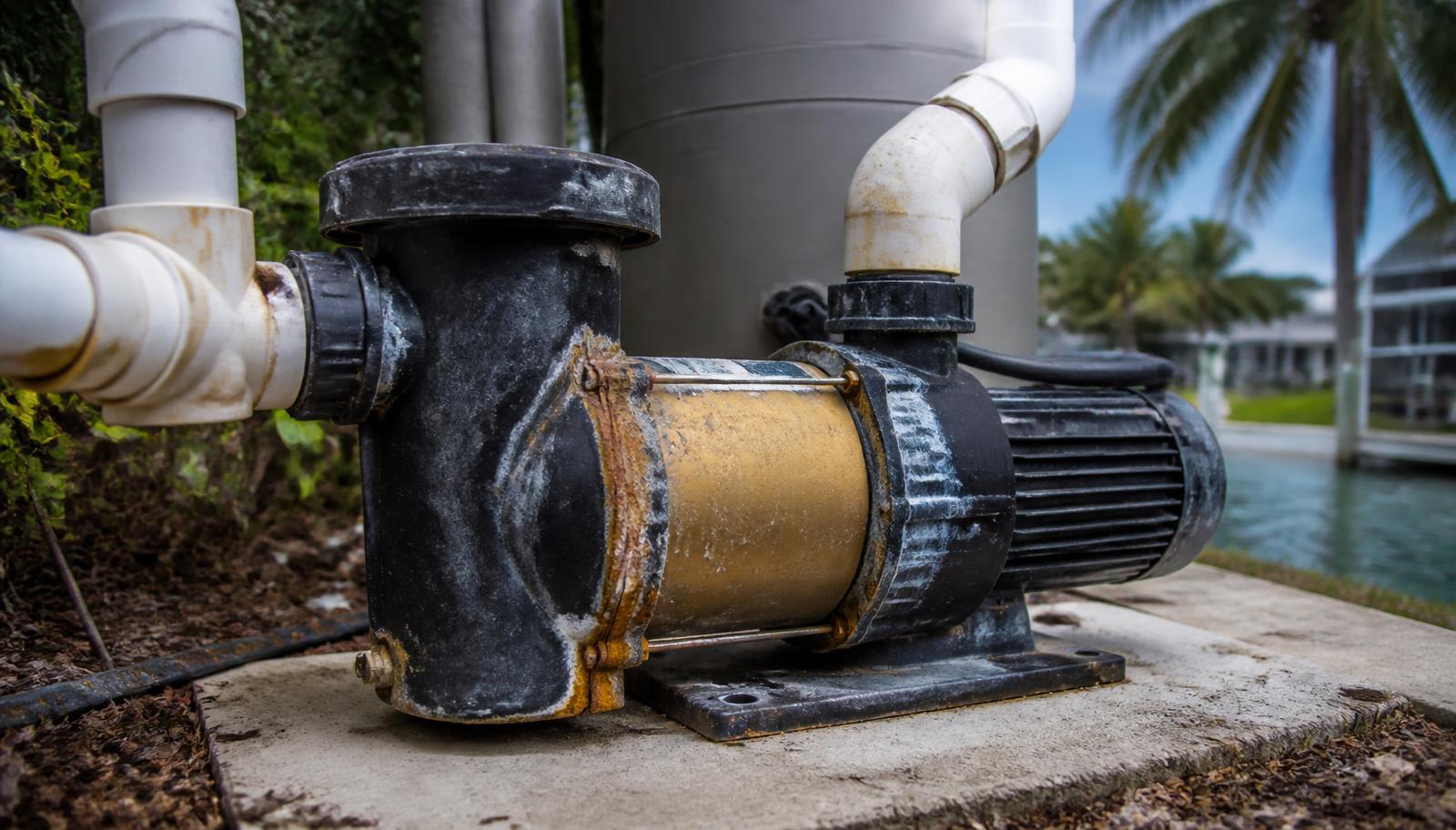
Coastal salt air and year-round operation shorten pump life compared with seasonal northern pools, and units within a few blocks of the Atlantic in Satellite Beach, Indialantic and Cocoa Beach show corrosion at the motor housing and fasteners earlier than inland pools in Viera or Rockledge. Rinsing the pad occasionally and keeping the motor vents clear genuinely helps.
Repair or replace?
Repair makes sense for seals, o-rings, lids, impellers and bearings on a reasonably young pump. Replacement makes sense when the motor is shorted, when the housing is cracked, or when an old single-speed unit is failing anyway — at that point a variable-speed pump usually pays for itself in electricity, and equipment installation handles the swap.
What to do while you wait
Turn the pump off at the breaker if it is screeching, tripping or leaking, and do not let the pool sit unfiltered for more than a couple of days in summer heat — that is how a pump problem becomes an algae problem. If your water is already turning, green pool recovery and the pump repair should be booked together. Contact us with the noise or symptom and the pump's age and we will tell you which way it is likely to go.
7 Signs Your Pool Pump Is About to Fail FAQs
How long does a pool pump last in Florida?
+
Less than in seasonal climates, because coastal pumps run year-round in salt air. Motors here typically show corrosion and bearing wear earlier than inland units.
Why is my pool pump humming but not starting?
+
Usually a failed start capacitor or a seized shaft. Turn it off at the breaker rather than letting it hum, which overheats the windings.
Can a pool pump be repaired or does it need replacing?
+
Seals, o-rings, lids, impellers and bearings are routine repairs. A shorted motor or cracked housing usually means replacement.
Is it safe to run a pool pump that trips the breaker?
+
No. Repeated trips indicate an electrical fault, which is a shock and fire risk on a wet equipment pad. Have it inspected before running it again.