Well Water and Pool Stains: Iron, Copper and How to Fix Them
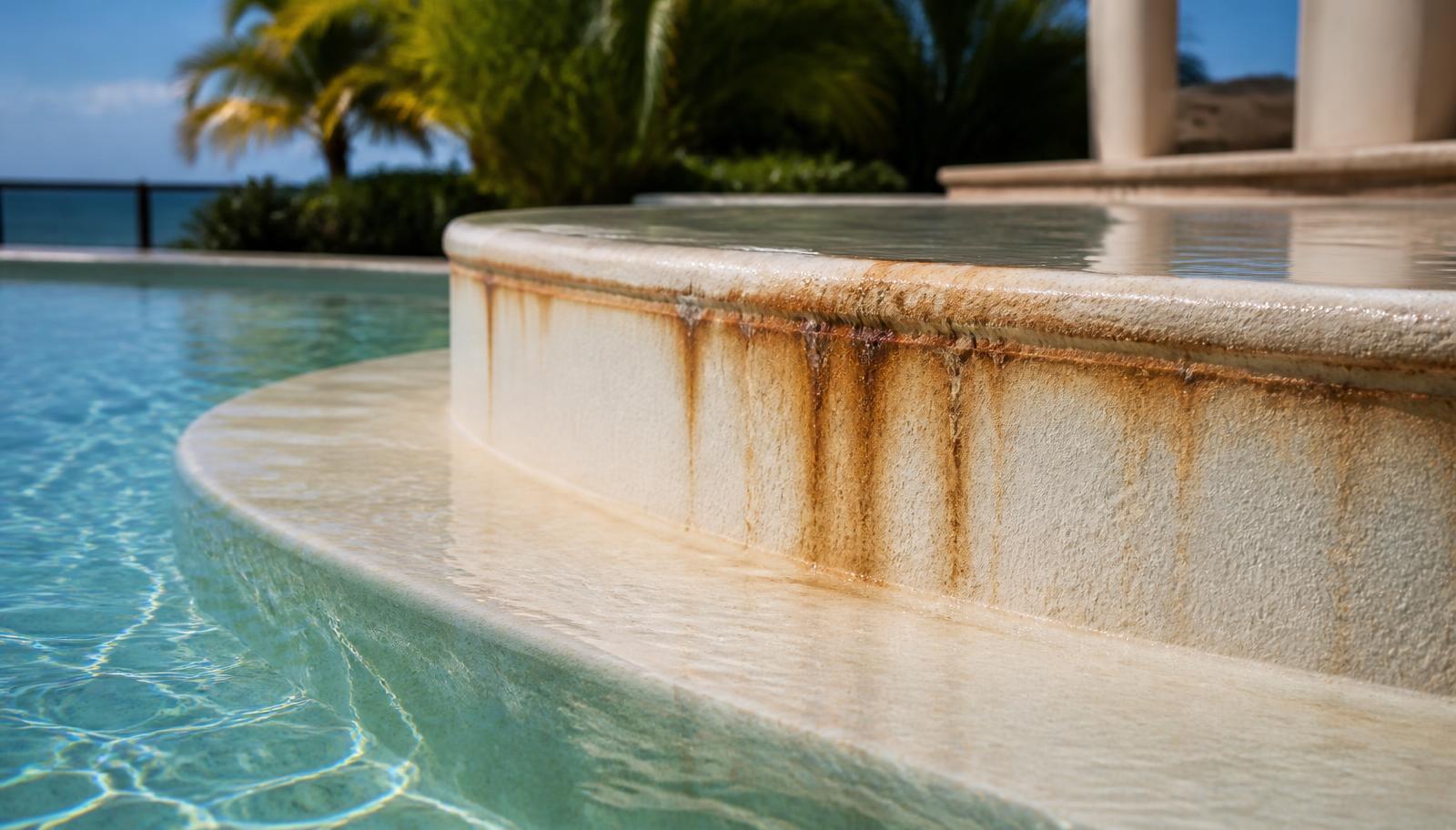
Brown streaks after a top-up are not dirt. They are metal coming out of the fill water, and chlorine is what makes them visible.
Well water pool stains are caused by dissolved metals — mostly iron, sometimes copper or manganese — that oxidize when they meet chlorine and settle onto the plaster. The metal is invisible in the fill water and becomes a brown, green or gray stain within a day of topping up. Parts of Brevard County outside city water still fill from wells, and this is the most common surprise for those Satellite Beach area owners.
How do you tell a metal stain from algae?
Metal stains do not brush off and they follow the pattern of the fill — often a streak below the hose or a general tint that appeared right after adding water. Algae brushes away and reappears in shaded, textured places. A quick field test: hold a chlorine tablet against the stain for a few seconds. If it lightens, it is likely organic; if it does not move, it is metal.
| Stain color | Likely metal | Common source |
|---|---|---|
| Rust brown or orange | Iron | Well water, corroding fittings |
| Blue-green on plaster | Copper | Copper plumbing, some algaecides |
| Purple crust | Copper with high cyanuric acid | Chemistry imbalance plus copper |
| Dark gray or black patches | Manganese | Well water |
| Green that brushes away | Algae, not metal | Sanitizer shortfall |
Why does chlorine make it worse?
Chlorine oxidizes dissolved metal, which converts it from an invisible solution into a visible deposit. That is why owners often shock a freshly filled pool and watch it turn brown within hours. The correct sequence is to handle the metal before or as you sanitize, not after.
What should you do before filling from a well?
- 01Test the fill water for iron and copper before it goes in, not after.
- 02Use a hose pre-filter designed to capture metals during the fill.
- 03Add a metal sequestrant as the pool fills, so metals stay in solution.
- 04Hold off on shocking until the sequestrant has circulated.
- 05Then balance normally, watching pH closely since high pH accelerates staining.
You cannot chlorinate metal out of a pool. You can only keep it dissolved, or take it out with the water.
How do you remove existing metal stains?
Ascorbic acid treatment lifts iron stains from plaster by reducing the metal back into solution, followed immediately by a sequestrant so it does not redeposit. Copper stains are more stubborn. This is a chemistry-heavy process that temporarily drops chlorine to near zero, so the pool is out of use during it and needs a careful rebalance afterward.
Stains that resist treatment, or plaster that is stained across the whole surface, are usually a drain and acid wash instead — the timing considerations are in when to drain and acid wash a pool in Florida.
How do you keep them from coming back?
- Dose a sequestrant on a maintenance schedule, since it depletes over time
- Filter every top-up from a well through a metal-capturing hose filter
- Keep pH in the 7.4 to 7.6 band; high pH drops metals out of solution
- Avoid copper-based algaecides on pools that already carry metal
- Watch for corroding metal parts in the pool itself, including heaters, rails and light rings
Getting help with it
Metal staining is one of the few pool problems where guessing makes it worse — the wrong product can set the stain permanently. Pool chemical balancing includes testing for metals and maintaining sequestrant, and weekly pool cleaning keeps pH where it needs to be so stains do not re-form. Contact us with a photo of the stain and whether the pool is on well water.
Well Water and Pool Stains FAQs
Can you fill a pool with well water in Florida?
+
Yes, but test it for iron and copper first and use a hose pre-filter and a sequestrant, or metals will stain the plaster once chlorine oxidizes them.
What causes brown stains in a pool?
+
Usually iron from well water or corroding metal parts. Brown metal stains do not brush off, which distinguishes them from algae.
How do you remove iron stains from pool plaster?
+
An ascorbic acid treatment followed immediately by a sequestrant, then a full rebalance. The pool is unusable during the process.
Do sequestrants remove metals from pool water?
+
No. They hold metals in solution so they cannot stain. Only replacing water actually removes them.