How Long to Run a Pool Pump in Florida
Run time is the cheapest water-quality tool you own, and most Space Coast pools are running too few hours in summer and too many in January.
A Florida pool pump should run long enough to turn the whole pool over once a day — usually 8 to 12 hours in summer and 6 to 8 hours in winter for a single-speed pump, and longer at lower speed for a variable-speed pump. Year-round heat means a Satellite Beach pool never gets the off-season a northern pool does, so run time is a seasonal dial rather than a set-and-forget number.
What is pool turnover and why does it set run time?
Turnover is the time it takes the pump to push a volume of water equal to the entire pool through the filter. One full turnover a day is the working minimum for a residential pool in this climate, and two is better in peak summer when heat, bathers and rain all load the water at once.
The math is simple: pool volume in gallons divided by the pump's flow rate in gallons per minute, divided by 60. A 15,000-gallon pool with a pump moving 45 gallons per minute turns over in about five and a half hours in theory, and real plumbing losses push that higher.
| Season on the Space Coast | Single-speed run time | Variable-speed approach |
|---|---|---|
| June to September | 10 to 12 hours | Long low-speed run, 12 to 18 hours |
| April, May, October | 8 to 10 hours | 10 to 14 hours at low speed |
| November to March | 6 to 8 hours | 8 to 12 hours at low speed |
| After a storm or heavy rain | 24 to 48 hours continuous | Continuous at medium speed |
| Algae treatment | 24 hours continuous | Continuous at medium to high speed |
What time of day should the pump run?
Run the bulk of the cycle during daylight. Chlorine burns off fastest under the Florida sun, and algae grows fastest in warm daytime water, so that is when circulation and sanitizer distribution matter most. Splitting the schedule into two blocks — morning and late afternoon — keeps the water moving across the whole day.
Overnight-only schedules save nothing meaningful on electricity here and leave the pool stagnant through the hottest hours.
Do variable-speed pumps change the answer?
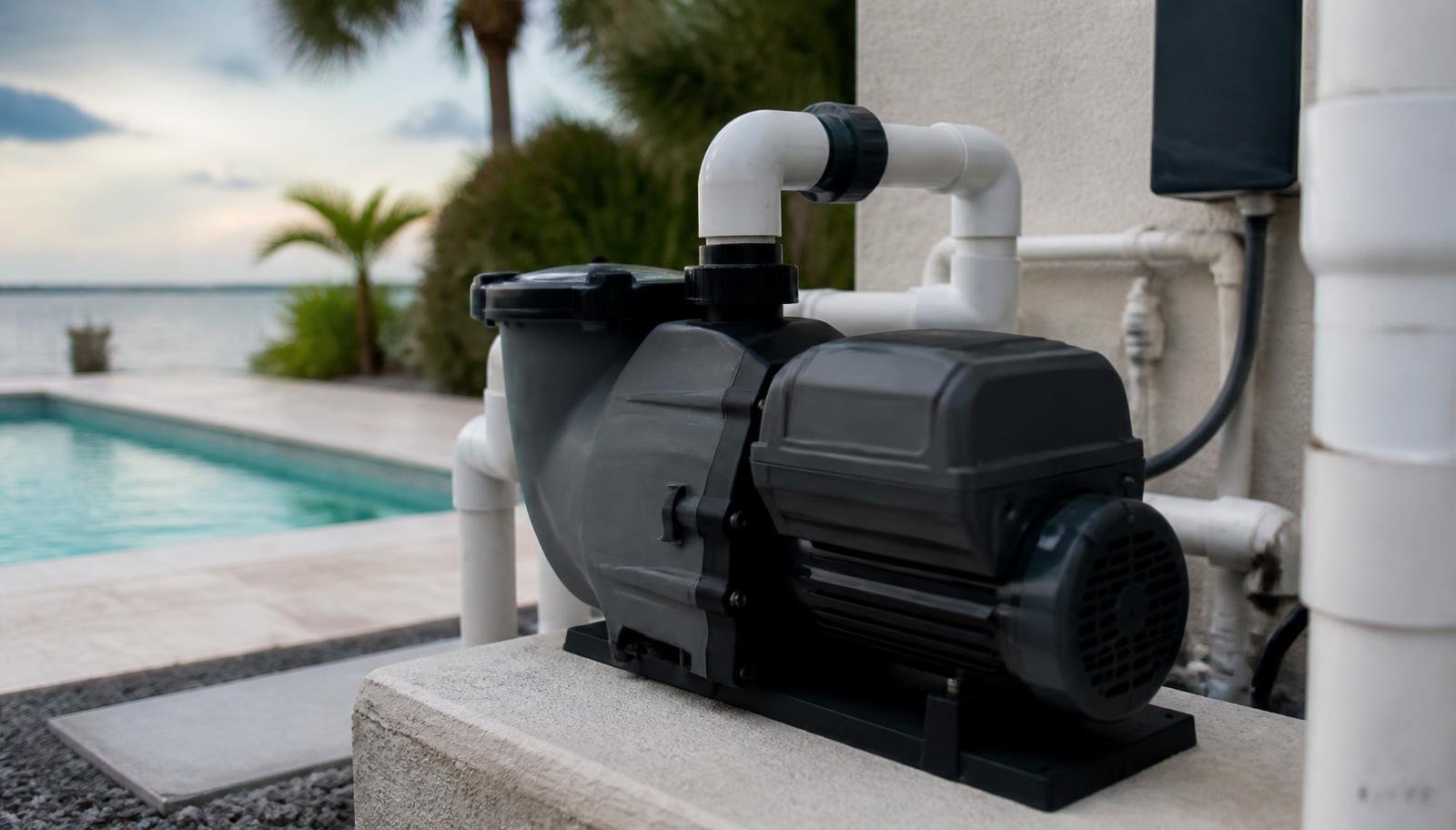
Yes, completely. A variable-speed pump moves water more efficiently at low RPM, so the right setting is a longer run at a lower speed rather than a short blast at full power. Many owners on the coast run 10 to 16 hours at low speed and only step the pump up for vacuuming, backwashing or running a spa.
- Low speed for daily filtration and salt cell operation
- Medium speed for skimming performance and after heavy rain
- High speed for vacuuming, backwash and water features
- Check that the salt chlorine generator sees enough flow at your lowest speed
Under-running the pump in July costs more in chemicals than the extra hours cost in electricity.
Signs your run time is too short
- Water clouds up between weekly visits
- Algae keeps reappearing in shaded corners and steps
- Chlorine reads fine at the equipment pad but low at the far end
- Debris settles on the floor and never reaches the skimmer
- A salt system cannot keep up because the cell is not running long enough
Can you run a pool pump 24 hours a day?
You can, and it will not harm the pump, but it is rarely necessary outside of algae treatment or storm recovery. A continuous run makes sense while you are clearing a problem; once the water is stable, drop back to a normal daily schedule.
How run time interacts with the rest of the system
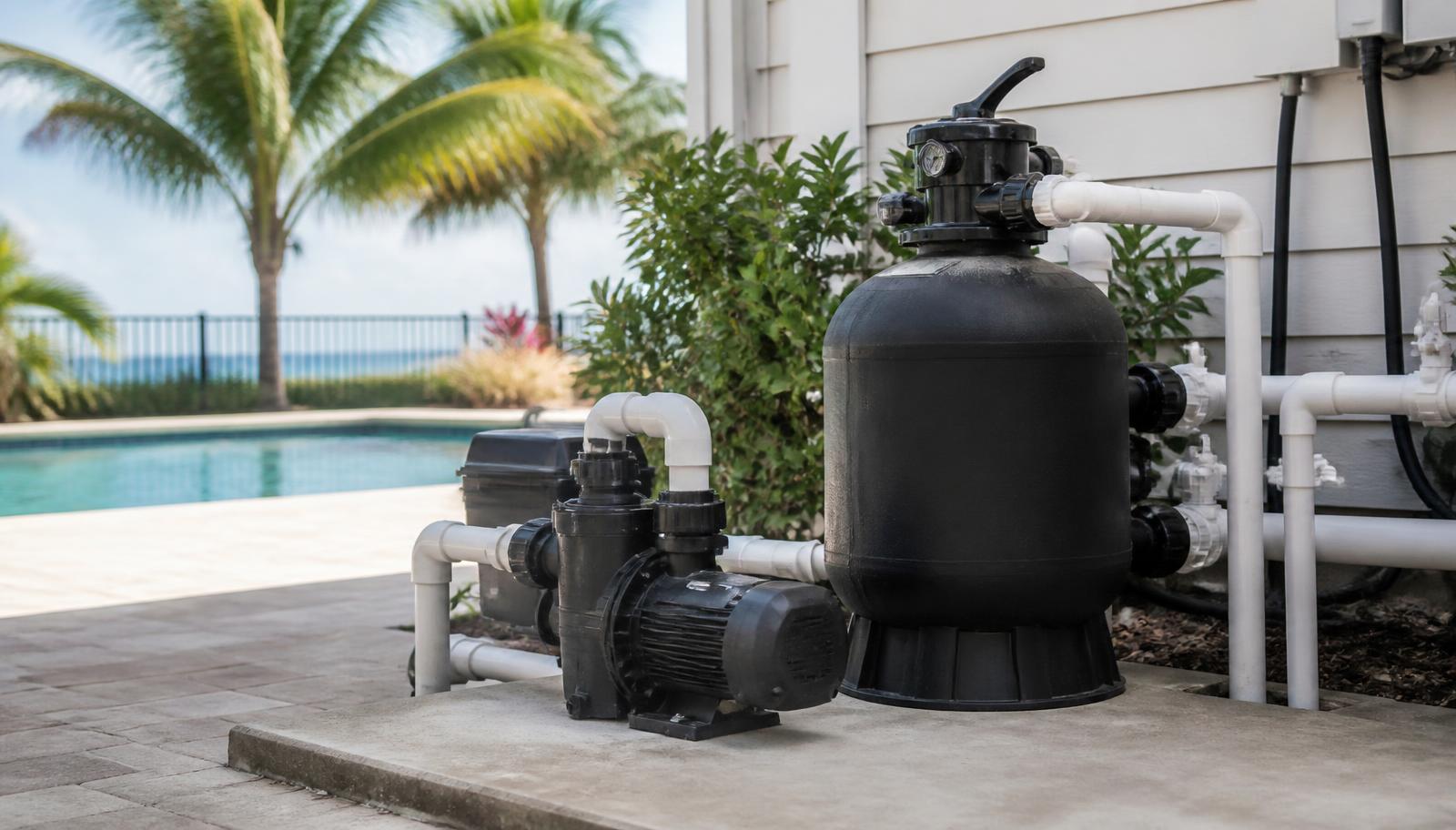
A clean filter and correct run time do most of the work of keeping a pool clear. If you are extending hours to compensate for a filter that is not filtering, you are paying for electricity instead of a filter cleaning. Likewise a pump that runs loud, hot, or trips its breaker needs pump and motor repair rather than a schedule change — the warning signs are in signs your pool pump is failing.
Not sure what your pool's turnover actually is? Contact us with your pool size and pump model and we will tell you what schedule makes sense for your equipment.
How Long to Run a Pool Pump in Florida FAQs
How many hours a day should a pool pump run in Florida?
+
About 8 to 12 hours in summer and 6 to 8 in winter for a single-speed pump. Variable-speed pumps run longer at lower speeds for the same turnover.
Is it better to run a pool pump at night or during the day?
+
During the day. Chlorine is consumed fastest in sunlight and algae grows fastest in warm daytime water, so circulation matters most then.
Can I run my pool pump only 4 hours a day?
+
Not in Florida. Four hours will not turn the water over once, and the pool will cloud and grow algae between service visits.
Does running the pump longer use a lot of electricity?
+
With a single-speed pump the cost is noticeable; with a variable-speed pump running at low RPM it is a fraction of that for the same turnover.