Pool Algae Types and How to Treat Each One
Green algae is a weekend. Mustard algae is a repeat offender. Black algae has roots. Treating all three the same is why blooms keep coming back.
There are three pool algae types a Florida owner will actually meet: green, mustard (yellow) and black. They look different, they live in different places, and they need different treatment — which is why a routine that clears one can leave another untouched. Warm water and long daylight mean a Satellite Beach pool can go from a faint tint to a full bloom in about 48 hours.
Green algae: the fast one
Green algae floats freely and turns the whole pool, usually starting as a cloudy tint before the color arrives. It is the most common type and the easiest to kill, but it multiplies fastest — a pump that fails on a Friday in July can produce a green pool by Sunday.
Treatment is chlorine, brushing and filtration: correct the pH first, shock hard, brush every surface, and run the pump continuously until the water clears. Heavy blooms are usually a green pool recovery job, and the causes are covered in why pools turn green in Brevard County.
Mustard algae: the one that comes back
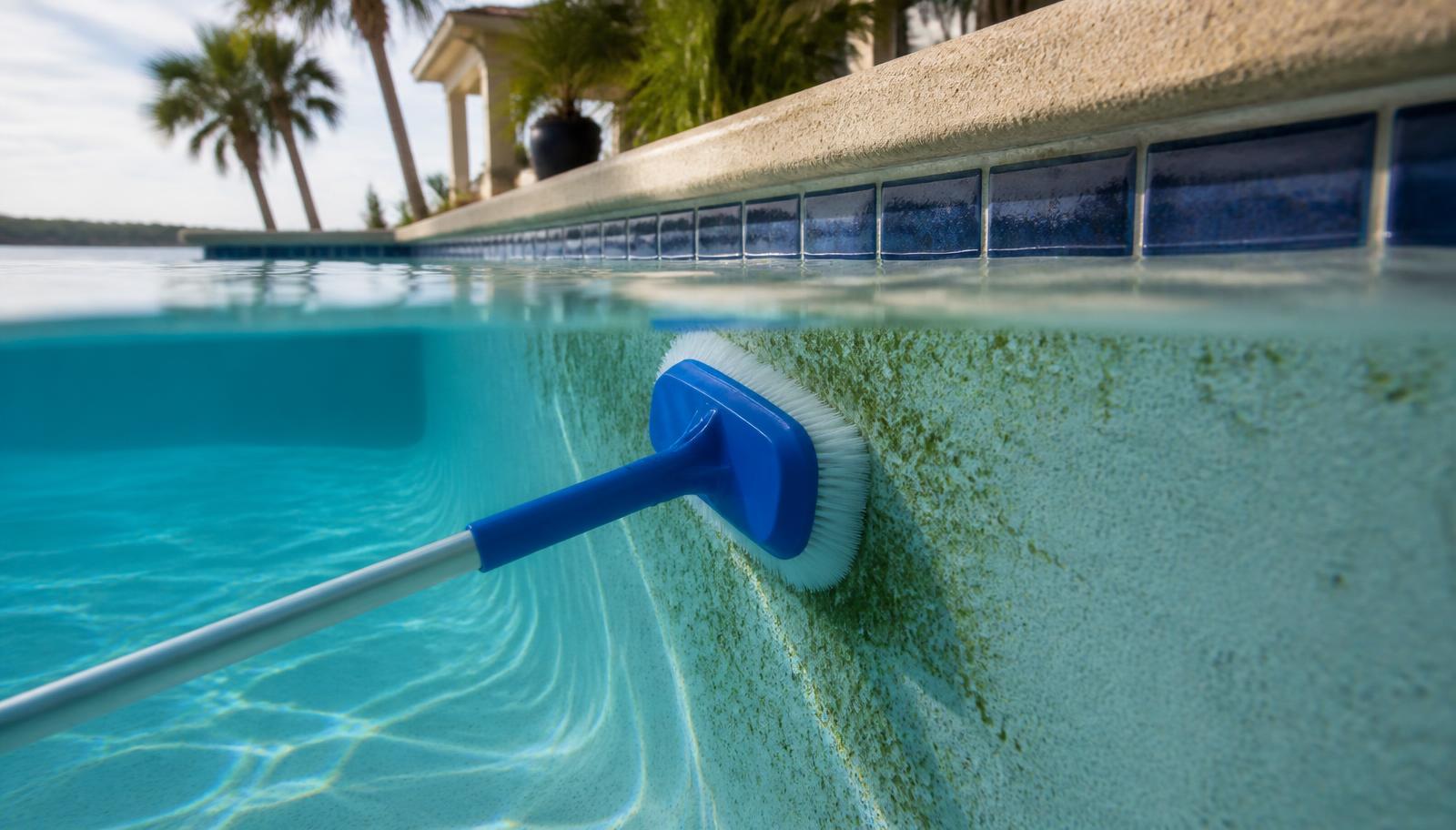
Mustard or yellow algae clings to shaded walls, steps and behind ladders, and it brushes off in a cloud that looks like sand or pollen. It tolerates normal chlorine levels far better than green algae, which is why owners think it is gone and see it again the following week.
- Brush all shaded surfaces, including steps and behind fittings
- Shock at a higher level than a green bloom requires, with pH corrected first
- Treat everything that touched the water: brushes, poles, nets, floats, swimsuits
- Repeat the brush-and-shock cycle after several days to catch regrowth
- Clean the filter afterward, because spores survive in the media
Black algae: the one with roots
Black algae appears as dark, raised spots that will not brush away, usually in plaster, grout lines and rough patches. It is not really an alga in the loose sense — it anchors into the surface with layers that shield the colony from chlorine, so surface treatment alone never finishes it.
Clearing it means physically breaking the cap with a stainless brush on plaster, treating the spots directly, and maintaining elevated chlorine for several days. Established black algae in a rough or aging surface often ends up as an acid wash and drain clean.
| Type | Where it lives | Brushes off? | Difficulty |
|---|---|---|---|
| Green | Suspended throughout the water | Yes | Low, but spreads fastest |
| Mustard / yellow | Shaded walls, steps, behind fittings | Yes, in clouds | Moderate, recurs easily |
| Black | Plaster pits and grout lines | No | High, needs surface work |
| Pink film (bacteria, not algae) | Waterline, fittings, skimmer | Yes, slimy | Moderate |
Algae is never the problem. It is the receipt for something else — a short run time, a stalled sanitizer, or a filter that quit.
Why do Florida pools bloom so easily?
Warm water year-round, intense UV that burns off unstabilized chlorine, summer storms that dilute the pool overnight, and heavy organic load from pollen and yard debris. Add a pump outage during hurricane season and the conditions are close to ideal for algae, which is why prevention here is about consistency rather than heroics.
How do you prevent algae?
- 01Hold free chlorine at 2 to 4 ppm every week, not just after problems.
- 02Keep pH between 7.4 and 7.6 so that chlorine actually works.
- 03Check cyanuric acid quarterly, since a locked pool grows algae at normal chlorine readings.
- 04Run the pump long enough for a full daily turnover — see how long to run a pool pump.
- 05Brush weekly, especially shaded corners, steps and behind ladders.
- 06Clean the filter on the pressure rule rather than the calendar.
When to stop treating and call someone
Call if the bloom returns within two weeks of clearing, if you cannot see the main drain, if black spots are anchored in the plaster, or if you are on the third round of shock with nothing to show for it. Those all point at an underlying cause rather than a chlorine shortage. Consistent weekly pool cleaning is what keeps it from repeating; contact us with a photo of the water and your latest test readings.
Pool Algae Types and How to Treat Each One FAQs
What is the difference between green and mustard algae?
+
Green algae floats through the water and clears with standard shock. Mustard algae clings to shaded surfaces, tolerates normal chlorine, and needs repeat treatment plus disinfecting your equipment.
Can you swim in a pool with algae?
+
Not safely. Algae itself is not usually the hazard, but its presence means sanitizer is not keeping up with bacteria, and it makes the pool slippery and hard to see into.
How do you get rid of black algae in a pool?
+
Break the protective cap by brushing, treat the spots directly, and hold elevated chlorine for several days. Established colonies in rough plaster often need a drain and acid wash.
Why does my pool keep getting algae?
+
Almost always a recurring cause: short pump run time, stabilizer too high, a worn filter, or chlorine that dips between service visits.