What to Do With Your Pool After Heavy Rain
A Space Coast downpour can undo a week of chemistry in an hour. Here is what to check first, what to skip, and when the pool is safe again.
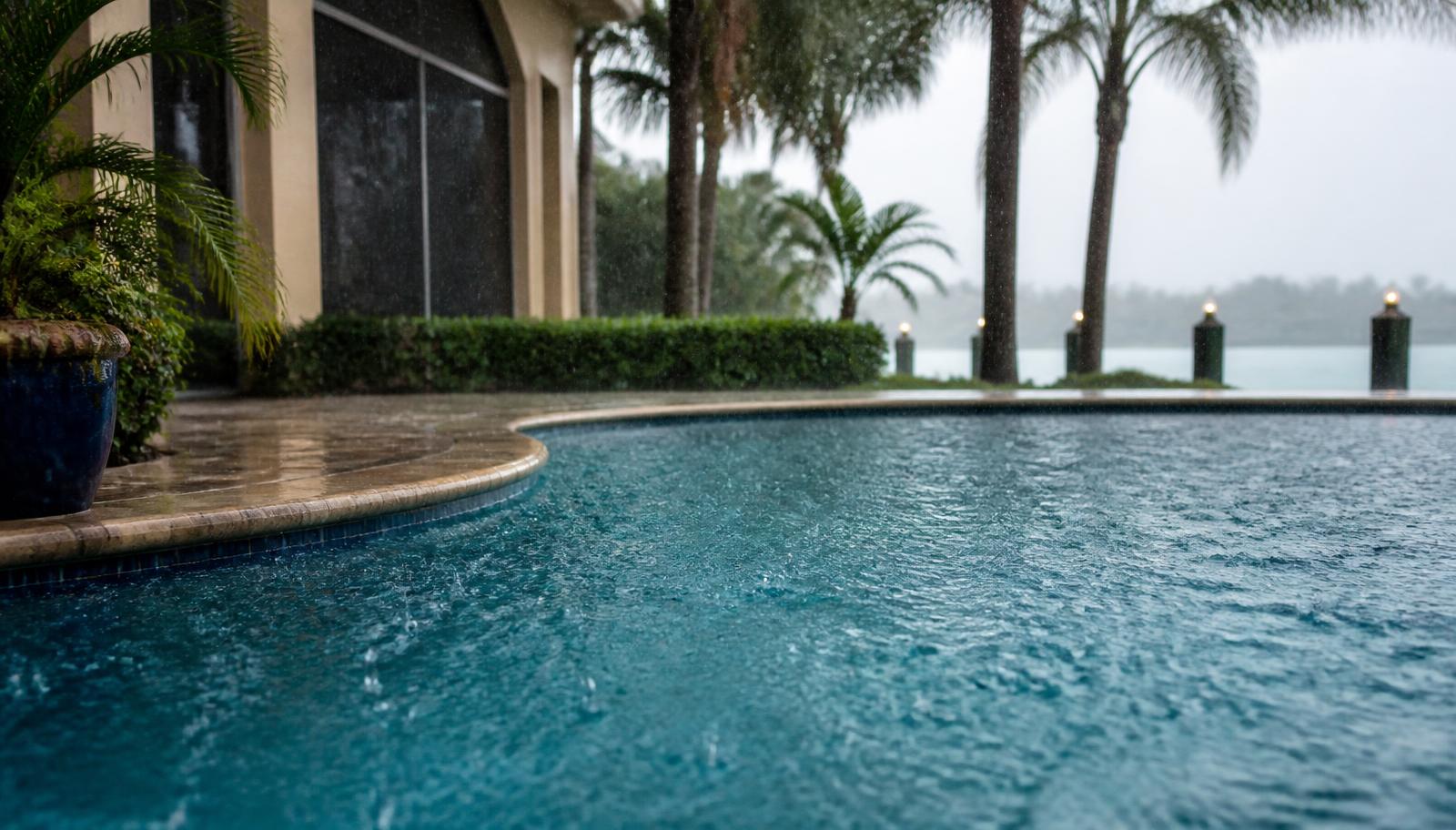
After heavy rain, deal with the pool in this order: clear the debris, check the water level, restore circulation, then rebalance the chemistry. Rain dilutes chlorine and stabilizer, drops total alkalinity, and carries organic material into the water — and in Satellite Beach a single summer afternoon can deliver several inches of it.
Does rain ruin pool water?
It does not ruin it, but it changes it. Rainwater is naturally acidic and carries no sanitizer, so it dilutes what is in the pool while adding organic load from the roof, deck and yard. A light shower is a non-event. A two-inch downpour usually means testing and correcting the same day.
First steps after the storm passes
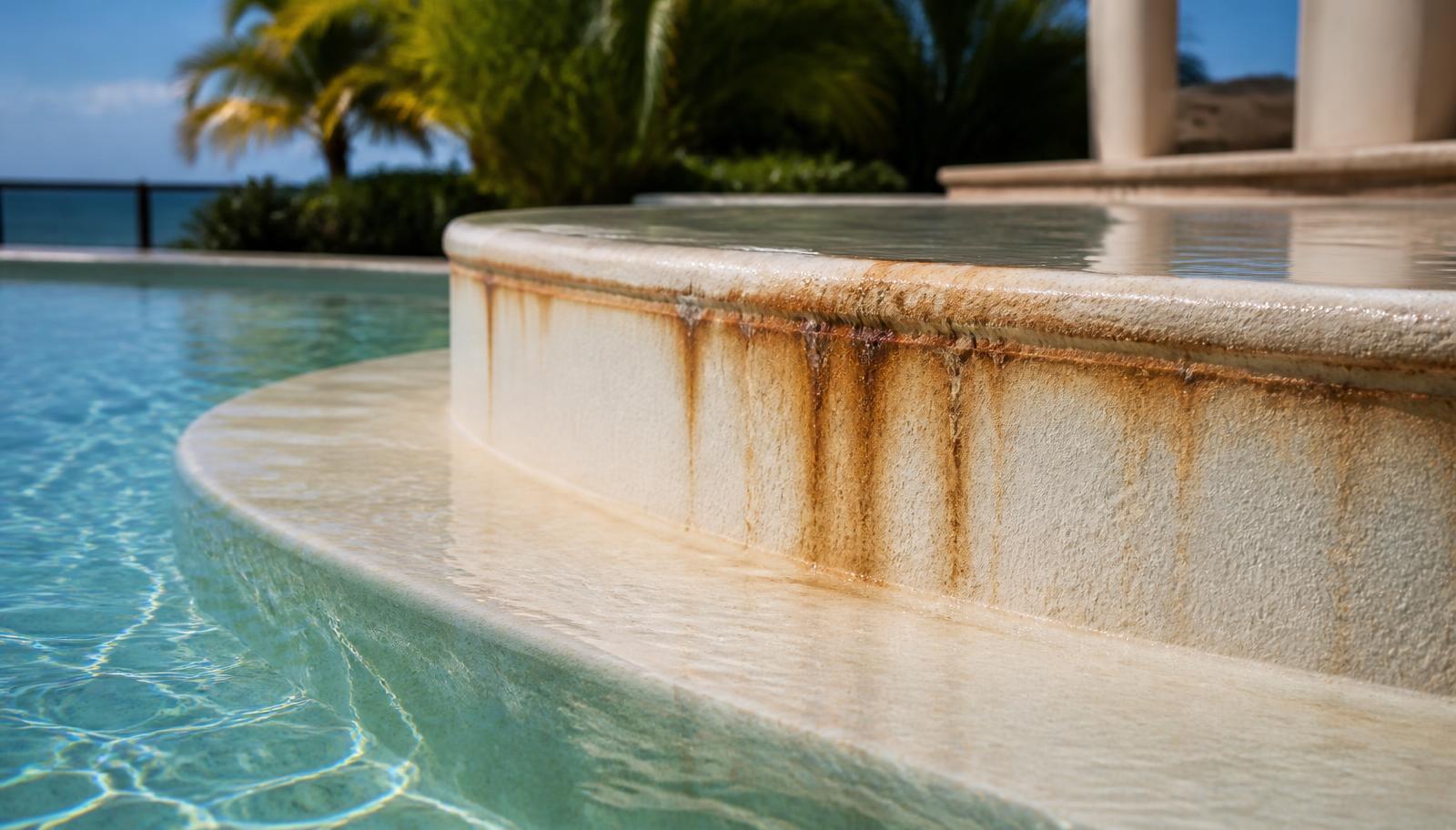
- 01Skim floating debris before it sinks and stains the surface.
- 02Empty the skimmer and pump baskets, which fill fast after a storm.
- 03Check the water level and lower it to mid-skimmer if it is over the tile.
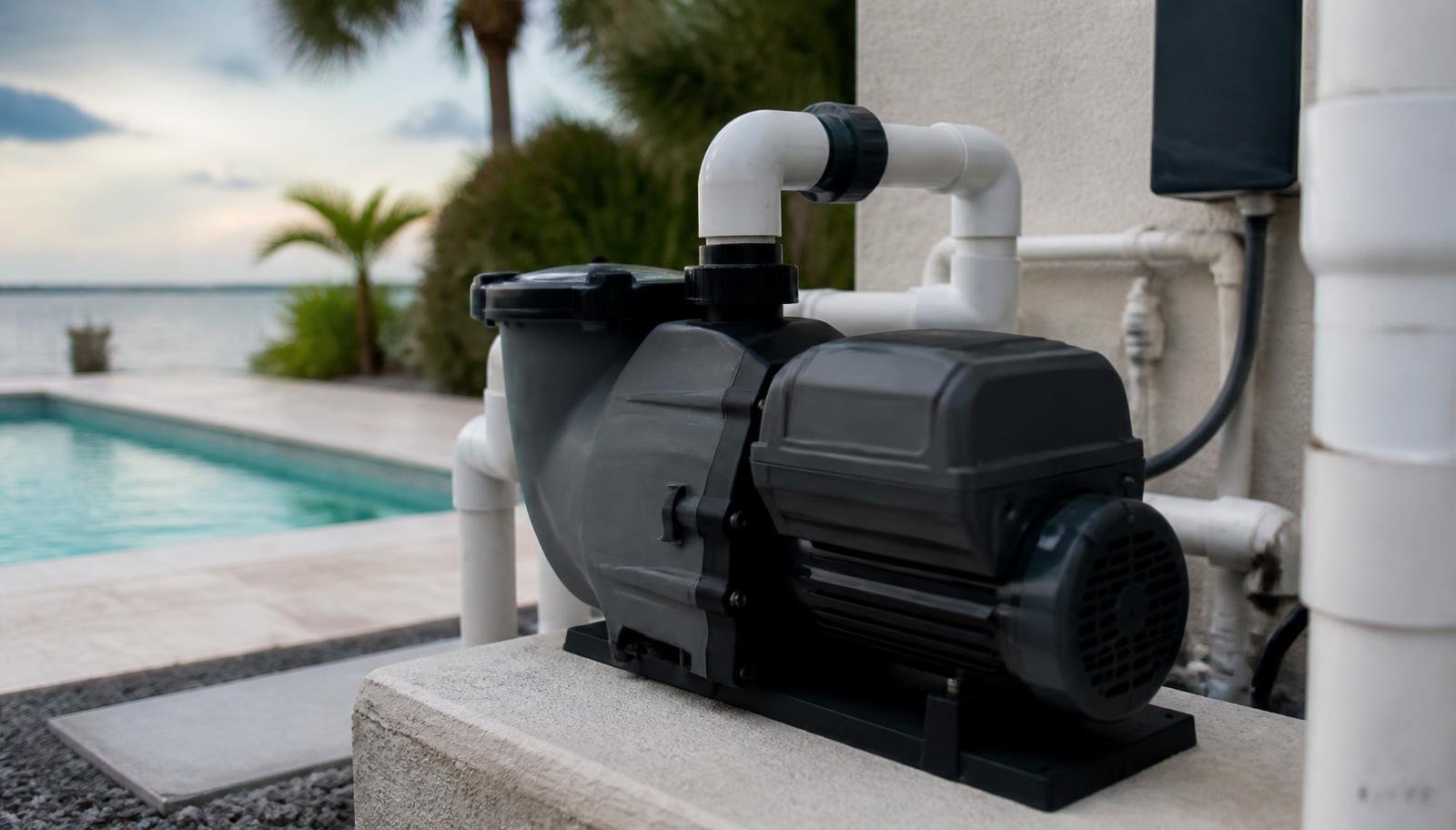
- 04Restart or verify circulation, and inspect the equipment pad for standing water.
- 05Run the filter continuously until the water clears, then test.
What does rain do to your chemistry?
| Reading | Typical change after heavy rain | Correction |
|---|---|---|
| Free chlorine | Drops, sometimes to zero | Shock, then hold 2 to 4 ppm |
| pH | Falls slightly | Raise back to 7.4 to 7.6 |
| Total alkalinity | Falls with dilution | Restore to 80 to 120 ppm first |
| Cyanuric acid | Diluted down | Top up only if below 30 ppm |
| Calcium hardness | Diluted down | Adjust only if well out of range |
Correct alkalinity before pH, and pH before chlorine — the sequence and the target numbers are in the Florida pool chemical levels guide.
Should you drain water off after a storm?
Only enough to bring the level back to the middle of the skimmer opening. Water above the tile line stops the skimmer from working, which is exactly when you need it working. Do not drain the pool low; Brevard County's high water table makes an over-drained pool a structural risk.
The pool that goes green after a storm is usually the one nobody restarted the pump on.
Why do pools turn green a few days after rain?
Because the storm removes the sanitizer and adds the food, and warm Florida water does the rest within 48 hours. If circulation was also interrupted by a power outage, the clock runs even faster. The full sequence is covered in why pools turn green in Brevard County, and a pool that has already turned is a green pool recovery job rather than a shock-and-hope one.
What to check on the equipment
- Standing water at the pad — never touch equipment while it is submerged
- A pump that lost prime while the power was out
- Filter pressure, which climbs quickly after a debris-heavy storm
- Timer and automation settings reset by an outage
- A salt cell that faults after a hard restart
A filter that ran through a storm often needs service immediately rather than on its usual schedule — see pool filter cleaning.
When is the pool safe to swim in again?
When free chlorine tests in the 2 to 4 ppm range, pH is back between 7.4 and 7.6, the water is clear enough to see the main drain, and there is no debris on the floor. Cloudy water alone is a reason to wait, because it means you cannot see a hazard on the bottom.
Storm season and standing service
From June through November, most owners who keep clear water are simply on a schedule. Weekly pool cleaning with chemical balancing absorbs the storm swings rather than reacting to them. If your pool took a hard hit and you would rather not chase it, contact us.
What to Do With Your Pool After Heavy Rain FAQs
Should I shock my pool after heavy rain?
+
Usually yes, after correcting alkalinity and pH. Rain dilutes chlorine and adds organic load, so a shock restores sanitizer before algae establishes.
Do I need to drain my pool after it rains?
+
Only enough to return the water to mid-skimmer. Draining lower is unnecessary and risky given Florida's high water table.
How long after rain can you swim in a pool?
+
Once free chlorine is back to 2 to 4 ppm, pH is 7.4 to 7.6, and the water is clear enough to see the bottom.
Why is my pool cloudy after rain?
+
Rain washes in fine particles and dilutes sanitizer. Run the filter continuously, rebalance, and clean the filter if pressure has climbed.