Above-Ground Pool Care in Florida
Less water means faster swings. Everything an in-ground pool tolerates for a week, an above-ground pool shows in two days.
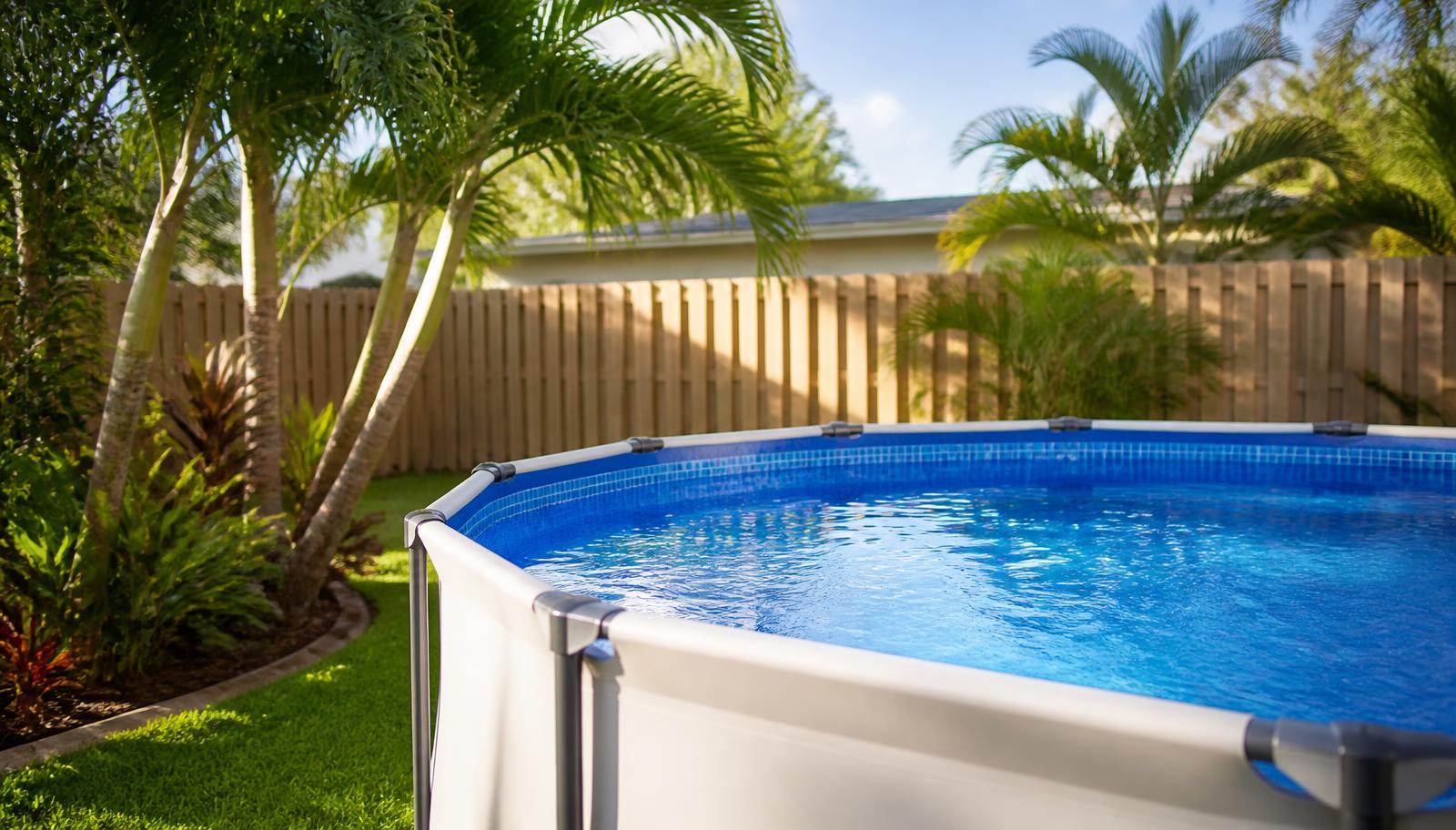
Above-ground pool care in Florida follows the same principles as an in-ground pool, but everything moves faster because there is less water to buffer it. A smaller volume heats up sooner, loses chlorine faster and reacts harder to every dose. Add Satellite Beach sun and summer storms and an above-ground pool can swing from balanced to cloudy inside a weekend.
What is different about a smaller pool?
| Factor | Above-ground | Practical effect |
|---|---|---|
| Water volume | Much smaller | Chemistry swings quickly; dose carefully |
| Water temperature | Warms faster | Higher sanitizer demand in summer |
| Surface | Vinyl liner | No brushing with stainless or abrasives |
| Skimming | Often a single skimmer | Debris lingers; skim by hand more often |
| Circulation | Fewer returns | Dead spots are common near the walls |
How do you dose a small pool safely?
Measure by actual volume, add chemicals with the pump running, and add them one at a time with hours in between. The most common above-ground mistake is dosing by eye with an in-ground pool's habits, which overshoots badly in a fraction of the water. Pre-dissolve granular products rather than dropping them onto the liner.
How do you protect a vinyl liner?
- Brush with a nylon brush only — never a stainless bristle brush
- Never let undissolved chlorine granules or tablets rest on the liner
- Keep pH in range, since low pH is hard on the liner and its seams
- Check the liner where it meets the wall for wrinkling or slipping
- Keep sharp toys, furniture and yard tools away from the wall
What about circulation and filtration?
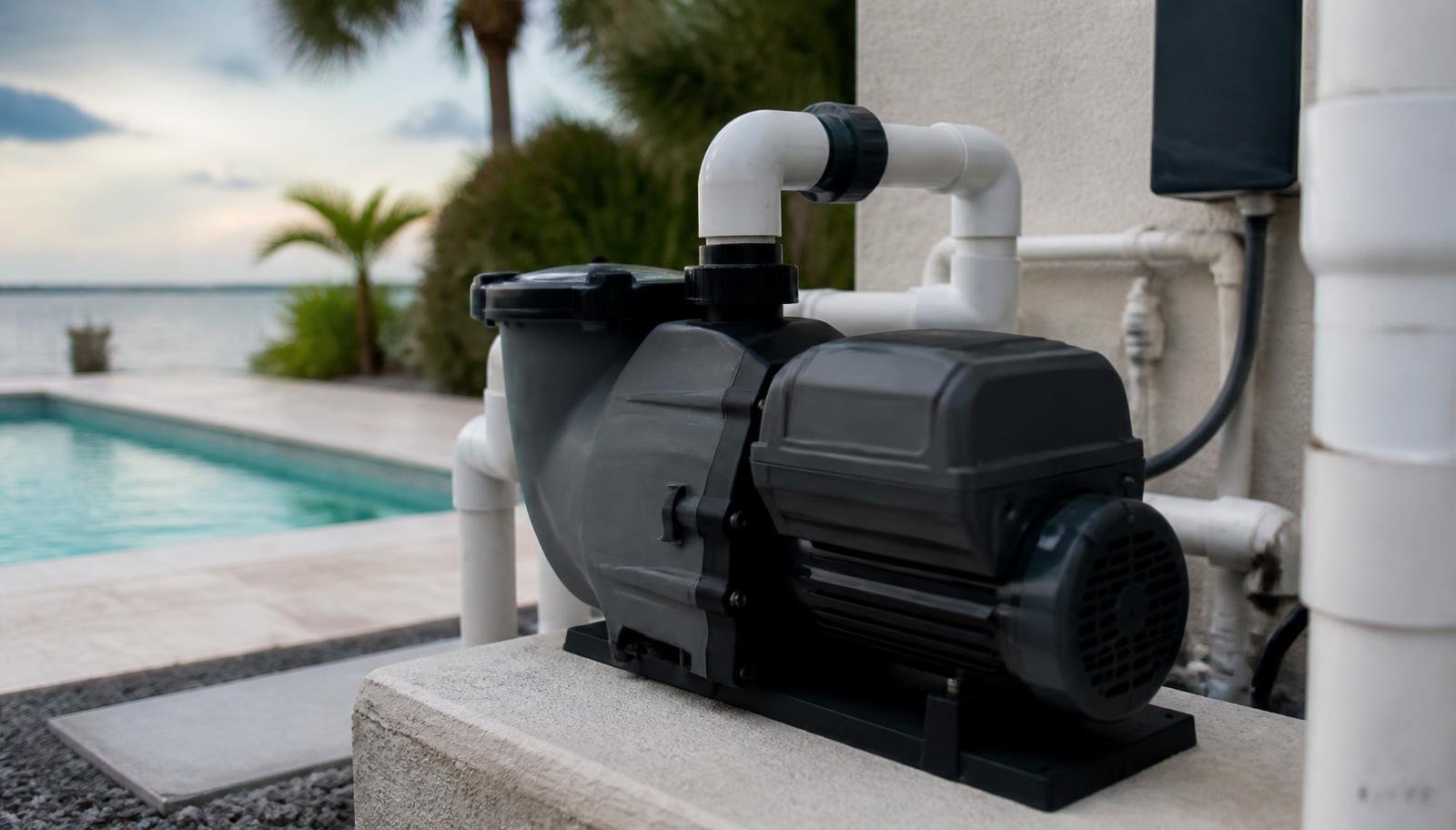
Above-ground filters are small, so they clog fast during pollen season and after storms. Watch the pressure the same way you would on a larger system, and expect more frequent service — the pressure rule and schedule are in how often to clean a pool filter. Point the return jet at a slight downward angle away from the skimmer to keep the whole pool moving.
An above-ground pool does not forgive a skipped week. There simply is not enough water in it to hide anything.
Do above-ground pools need to run year-round in Florida?
Yes. There is no freeze to close for, and stopping circulation in warm water is how a clear pool becomes a green one. Run times can be shorter in winter but should never drop to zero — the turnover targets are in how long to run a pool pump in Florida.
Storm season with an above-ground pool
Leave the water in it. Never drain an above-ground pool ahead of a storm — the water is the ballast keeping the wall standing. Remove ladders, floats and loose deck items, secure or remove the pump if flooding is expected, and lower the level only slightly if heavy rain is forecast. The full routine is in how to prep your pool before a hurricane.
Weekly routine that works
- 01Skim and empty the skimmer basket.
- 02Test chlorine and pH; correct alkalinity first if it has drifted.
- 03Brush the walls and floor with a nylon brush.
- 04Vacuum the floor, since above-ground pools trap debris in the deepest point.
- 05Check filter pressure and the return flow.
- 06Top up the water level to mid-skimmer.
Owners who would rather not run that every week can hand it off — weekly pool cleaning and chemical balancing cover above-ground pools as well, and contact us with the pool's size and filter type for a schedule that fits it.
Above-Ground Pool Care in Florida FAQs
How often should an above-ground pool be cleaned in Florida?
+
Weekly at minimum, and chemistry checked twice weekly in summer, because a smaller volume swings faster than an in-ground pool.
Can you brush a vinyl pool liner?
+
Yes, with a nylon brush. Stainless bristles and abrasive pads will damage the liner.
Should I drain my above-ground pool before a hurricane?
+
No. The water weight holds the wall in place. Remove loose items and secure the equipment instead.
Do above-ground pools need the pump running all year in Florida?
+
Yes. There is no freeze season here, and stopping circulation in warm water leads to algae within days.