Salt Cell Maintenance for Florida Pools
A salt pool is not a no-maintenance pool. The cell scales, the pH climbs, and the output quietly drops until the water turns.
Salt cell maintenance means keeping the cell free of calcium scale, keeping pH down, and keeping salt in the range the generator expects. A salt chlorine generator makes chlorine from dissolved salt, and it stops doing that reliably the moment the plates crust over. On the Space Coast, hard fill water and year-round run hours make scaling the most common reason a Satellite Beach salt pool loses its chlorine.
How does a salt chlorine generator work?
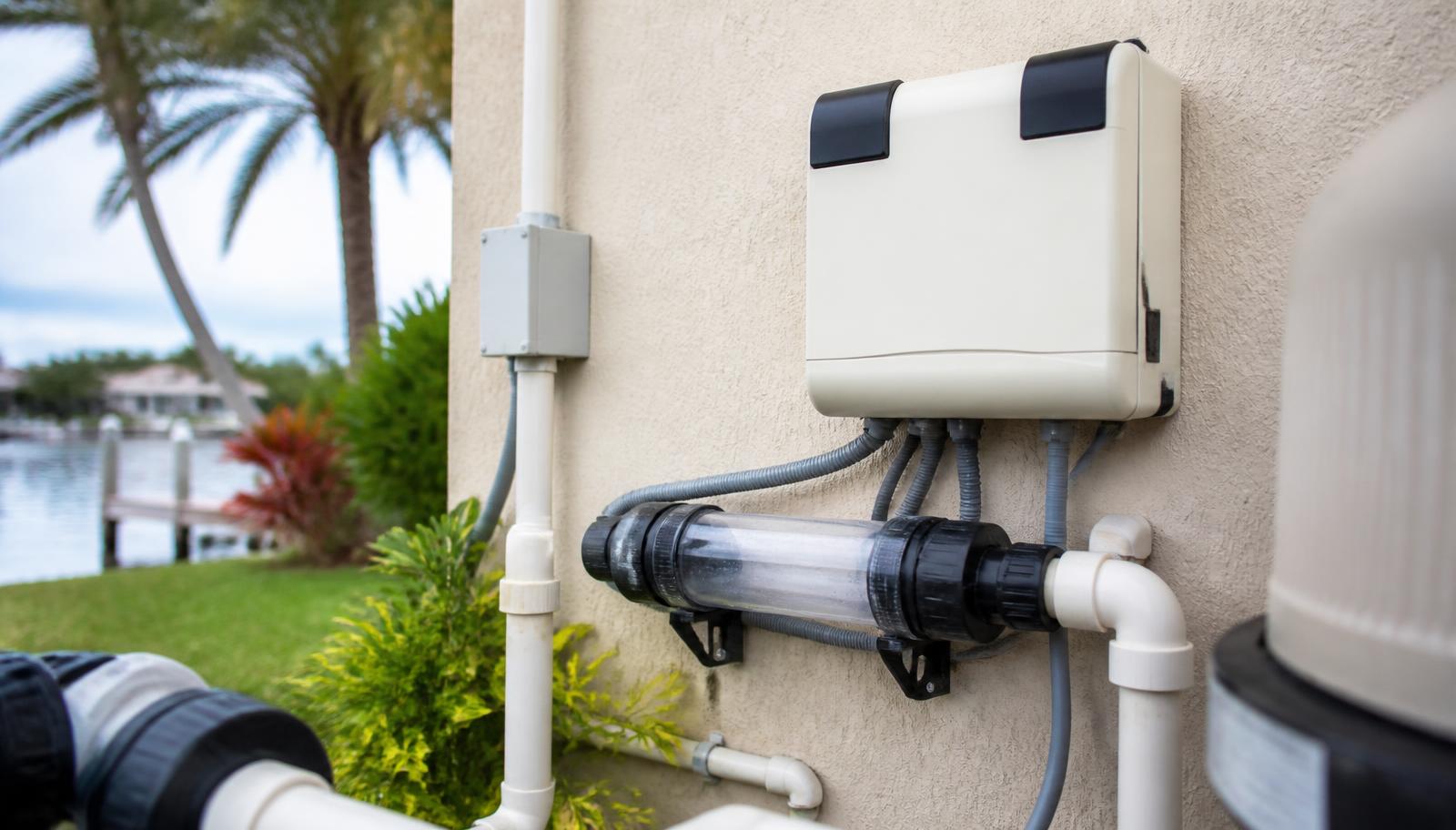
Water passes through a cell containing coated metal plates carrying a low-voltage current, which converts dissolved salt into chlorine. The chlorine sanitizes the pool and eventually reverts to salt, so the same salt cycles repeatedly. You still have a chlorine pool — you just make the chlorine on site instead of carrying it home.
How often should you clean a salt cell?
Inspect it every three months and clean it when you can see white crust on the plates. Many Brevard County pools need a cleaning two to three times a year; pools with hard fill water or a habit of running high pH need it more often. Self-cleaning cells reverse polarity to shed scale, which reduces the frequency but does not eliminate it.
| Symptom | What it usually means | Action |
|---|---|---|
| Low salt warning with correct salt level | Scaled or aging cell | Inspect and clean the cell |
| Chlorine low while output is set high | Cell losing production | Clean, then test output |
| Visible white crust on plates | Calcium scale | Acid-wash the cell per the manufacturer |
| pH climbing every week | Normal for salt systems | Dose acid regularly, keep alkalinity in range |
| Cell over five years old with weak output | End of service life | Plan a replacement |
How do you clean a salt cell safely?
- 01Turn the system off at the breaker and remove the cell from its plumbing.
- 02Rinse it with a hose first — light scale often comes off with water alone.
- 03If crust remains, use the manufacturer's recommended acid dilution in a cell stand, never full-strength acid.
- 04Soak only until the fizzing slows, usually a few minutes, then rinse thoroughly.
- 05Reinstall with the flow direction correct and check the unions for leaks.
Never scrape the plates with anything metal. The coating on those plates is the expensive part, and once it is scratched the cell's output never fully recovers.
Every salt cell dies eventually. Scale just decides whether that happens in year three or year seven.
Why does pH keep rising on a salt pool?
Chlorine generation is inherently alkaline, so a salt pool trends upward in pH by design. Left alone it climbs past 7.8, which both weakens the chlorine being produced and accelerates scaling on the cell itself — a loop that ends with a pool that cannot hold chlorine.
Regular acid dosing and total alkalinity kept in the 80 to 120 ppm band break the loop. The full set of targets is in pool chemical levels.
What salt level should a Florida pool run?
Follow the generator's specification rather than a general number, since models differ. Test salt separately from the generator's own display, because a scaled cell reports low salt when the real problem is production. Rain dilution and splash-out both drop the level over a summer, so it is worth checking quarterly.
Does salt damage coastal equipment?
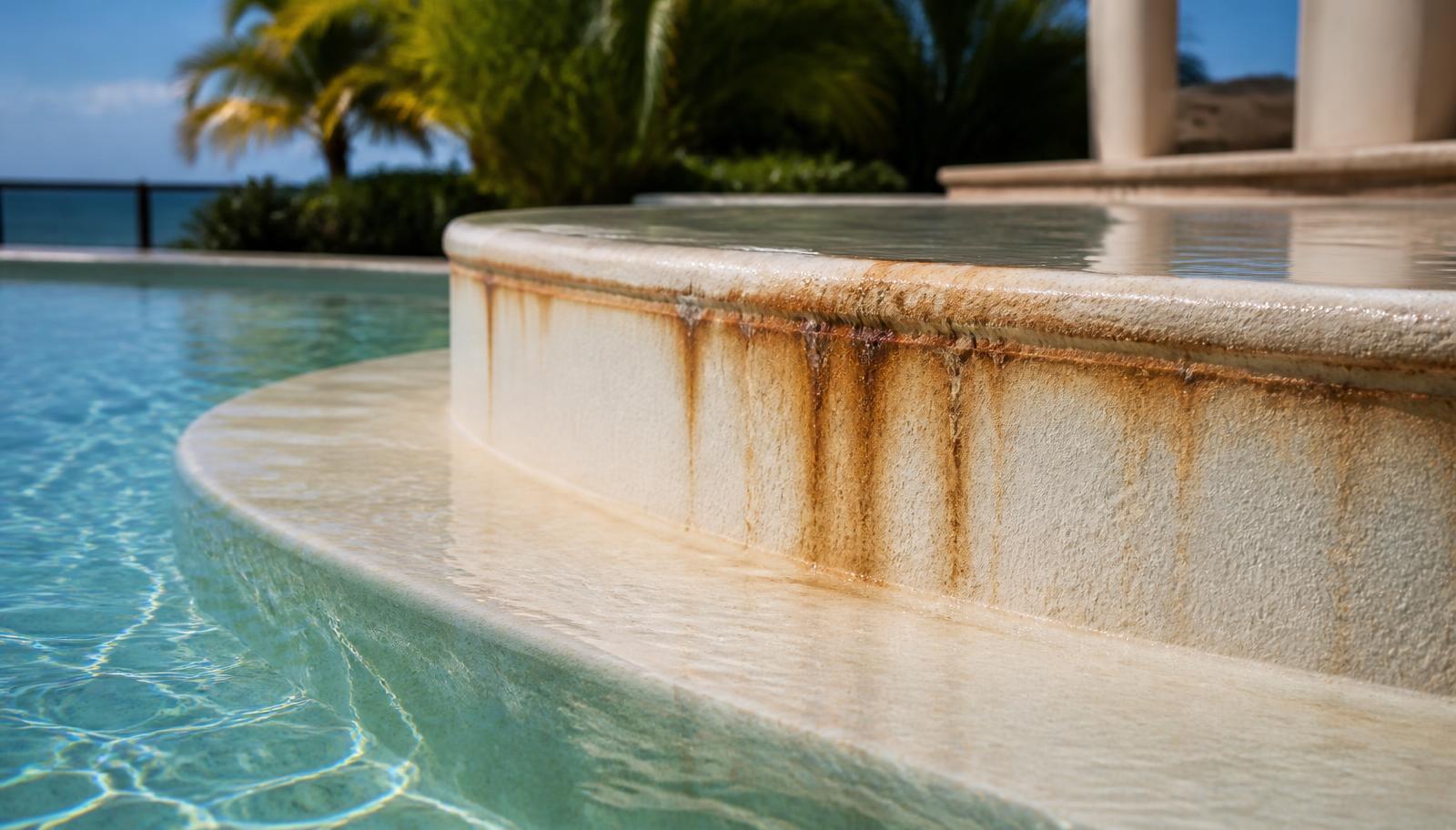
Pool salt levels are far below seawater, but salt plus coastal air is still hard on metal. Rinse the deck and equipment pad occasionally, keep splash-out off stone coping, and watch handrails, light rings and ladder anchors for corrosion — a real consideration in Satellite Beach, Indialantic and Cocoa Beach.
When to bring someone in
Call when the cell reads low salt after you have verified the actual salt level, when chlorine stays low at maximum output, or when the unit throws faults it did not throw before. Salt chlorine systems covers cleaning, diagnostics and replacement, and scale on the cell usually means scale on the tile too — see calcium buildup on pool tile. Contact us with the model and the fault it is showing.
Salt Cell Maintenance for Florida Pools FAQs
How often should a salt cell be cleaned?
+
Inspect quarterly and clean whenever white scale is visible on the plates. Most Florida pools need it two to three times a year.
Why is my salt cell saying low salt when salt is fine?
+
A scaled or aging cell reports low salt because production has dropped. Clean the cell first, then retest the actual salt level independently.
How long does a salt cell last?
+
Several years with regular cleaning and controlled pH, less on pools that run high pH or hard water, which scale the plates faster.
Do salt pools still need chlorine testing?
+
Yes. A salt pool is a chlorine pool, and free chlorine still needs to test in the 2 to 4 ppm range.