Is a Variable-Speed Pool Pump Worth It in Florida?
Florida pools run twelve months a year, which is exactly the condition a variable-speed pump is built for. Here is what changes and what does not.
A variable-speed pool pump is usually worth it in Florida, because the advantage grows with run hours and Florida pools never stop running. Instead of one fixed speed, the motor runs at whatever speed the task needs — low and long for filtration, higher for vacuuming or a spa. For a Satellite Beach pool circulating year-round, that difference compounds across every month of the year.
How is it different from a single-speed pump?
A single-speed motor has one setting: full. Every hour of filtration runs at the same power draw as a hard vacuum cycle. A variable-speed motor throttles down, and because power consumption falls much faster than speed does, running twice as long at half speed uses noticeably less energy while moving the same total water.
| Factor | Single-speed | Variable-speed |
|---|---|---|
| Filtration hours | Short, at full power | Long, at low power |
| Noise | Constant and loud | Quiet at filtration speeds |
| Water clarity | Bursts of circulation | Steadier turnover through the day |
| Equipment wear | Hard starts at full load | Gentler on plumbing and seals |
| Purchase cost | Lower | Higher |
Does it actually save money?
Energy use drops meaningfully, and the payback depends on your run hours, your rate and how the pump is programmed. A pump left on high all day is a variable-speed pump in name only, which is the single most common reason an owner sees no difference after an upgrade. Programming matters as much as the hardware.
We do not quote savings figures, because they depend entirely on your pool and your schedule. What is reliable is the direction: longer low-speed filtration costs less than shorter full-speed filtration for the same turnover.
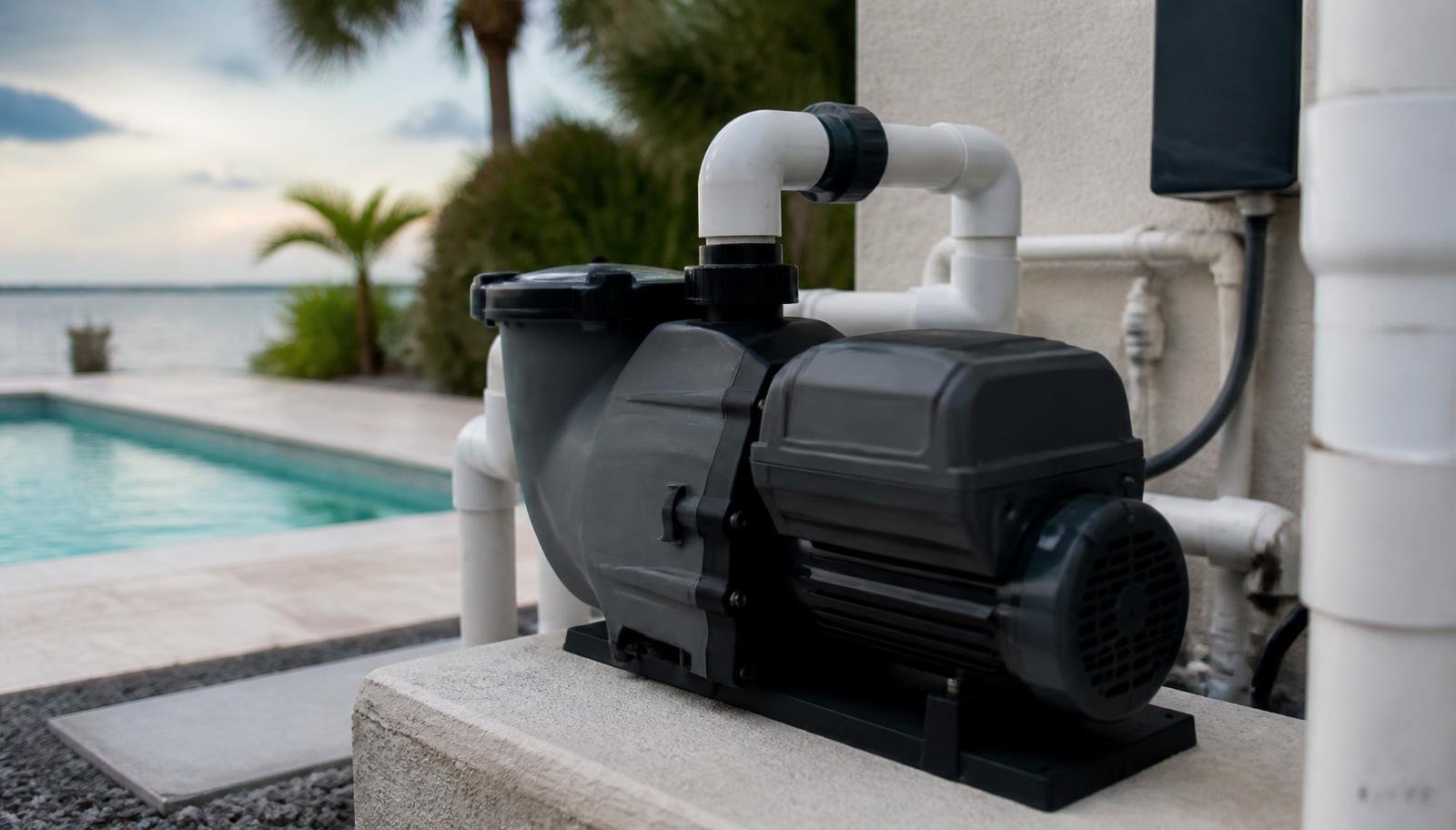
The pump is the only thing on the pad that runs every single day. That is why it is the one worth getting right.
What else improves besides the bill?
- Quieter operation, which matters on tight beachside lots
- Steadier circulation, which helps clarity and chemical distribution
- Better skimming, because the surface is being pulled all day rather than in bursts
- Softer starts, which are easier on unions, seals and the filter
- Programmable speeds for cleaning, spa jets and water features
How long should you run one?
Long enough for a full daily turnover at whatever speed you choose — typically many more hours than a single-speed pump, at a fraction of the draw. The scheduling detail is in how long to run a pool pump in Florida.
When should you upgrade?
The natural moment is when the existing pump fails or starts telling you it is about to — the warning signs are listed in signs your pool pump is failing. Replacing a healthy single-speed purely to upgrade is a slower payback, but replacing a dying one with another single-speed rarely makes sense in a climate with no off-season.
Sizing and installation
Bigger is not better. An oversized pump pushes water through the filter too fast to filter well and strains the plumbing; the right size matches the pool volume, the pipe diameter and the filter's flow rating. Coastal installs also deserve attention to the pad, wiring and enclosure, since salt air is hard on motor housings.
Pool pump and motor repair covers diagnosis on an existing unit, and pool equipment installation handles sizing and replacement. Contact us with your pool's approximate volume and current pump and we will tell you whether an upgrade is the right call.
Is a Variable-Speed Pool Pump Worth It in Florida? FAQs
Is a variable-speed pool pump worth it in Florida?
+
For most year-round pools, yes. The savings scale with run hours, and Florida pools run every month of the year.
Do variable-speed pumps clean the pool better?
+
They circulate more steadily, which improves skimming and chemical distribution, and slower flow through the filter often filters finer particles better.
How long do you run a variable-speed pump?
+
Longer than a single-speed, at a lower speed, targeting one full water turnover per day.
Can I install a variable-speed pump myself?
+
It involves electrical connections and correct sizing against your filter and plumbing, so most owners have it installed rather than swapping it themselves.